Wakeley Road Primary School
Well-known TV and radio broadcaster Professor E N Andrade opened Wakeley Road Primary School on Tuesday May 11th 1954. The School also opened on the same day as Featherby Junior and Twydall and Featherby Infant’s Schools, all constructed about the same time as part of a plan in Gillingham to meet the growing demand for more schools in the area.
Wakeley Road Primary School became the first of the new schools to be opened in front of parents and a party of 140 people from the education sector. Rainham vicar Reverend F Jordan who also served as vice-chairman of Gillingham Education Committee conducted a dedication service. After this the audience watched a film made about Medway schools in which about 10,000 Medway schoolchildren participated. Richmond Road Secondary School teacher Mr P Northcott acted as cameraman for the film designed to show the ideas underlying the educational practices of schools in the area.
Terry Arnold attended the school during the late 1950s and early 1960s and remembers that there were about 240 pupils, eight classrooms, a hall, a canteen and a playing field. He also recalls his four teachers Mrs Gott, Mr Hopkins, Mr Martin and Mr Chudley, a New Zealander. Of these he says that the boys all liked Mrs Gott because she was very attractive and Mr Chudley became the first teacher who asked the pupils to call everyone by their first names.
Terry remembers Mr Martin starting a gardening class when pupils had to dig up part of the school field which he found gruelling work. He also remembers that when taking basket weaving classes with Mr Hopkins some boys enjoyed breaking bits of material off their baskets, soaking these in the sink then setting the ends alight and smoking them like cigarettes.
Terry recalls Sports Day that took place annually on the school playing field each summer and usually included a relay competition against pupils from St Margaret’s School in Station Road. He also remembers the annual school nativity play in which he once participated as ‘The Black King.’
Terry says that the boys liked football and played during the playtime breaks. They also played some matches against other schools. The school had a good reputation for PE and Terry recalls a film being made about the pupils performing exercise routines in the school hall.
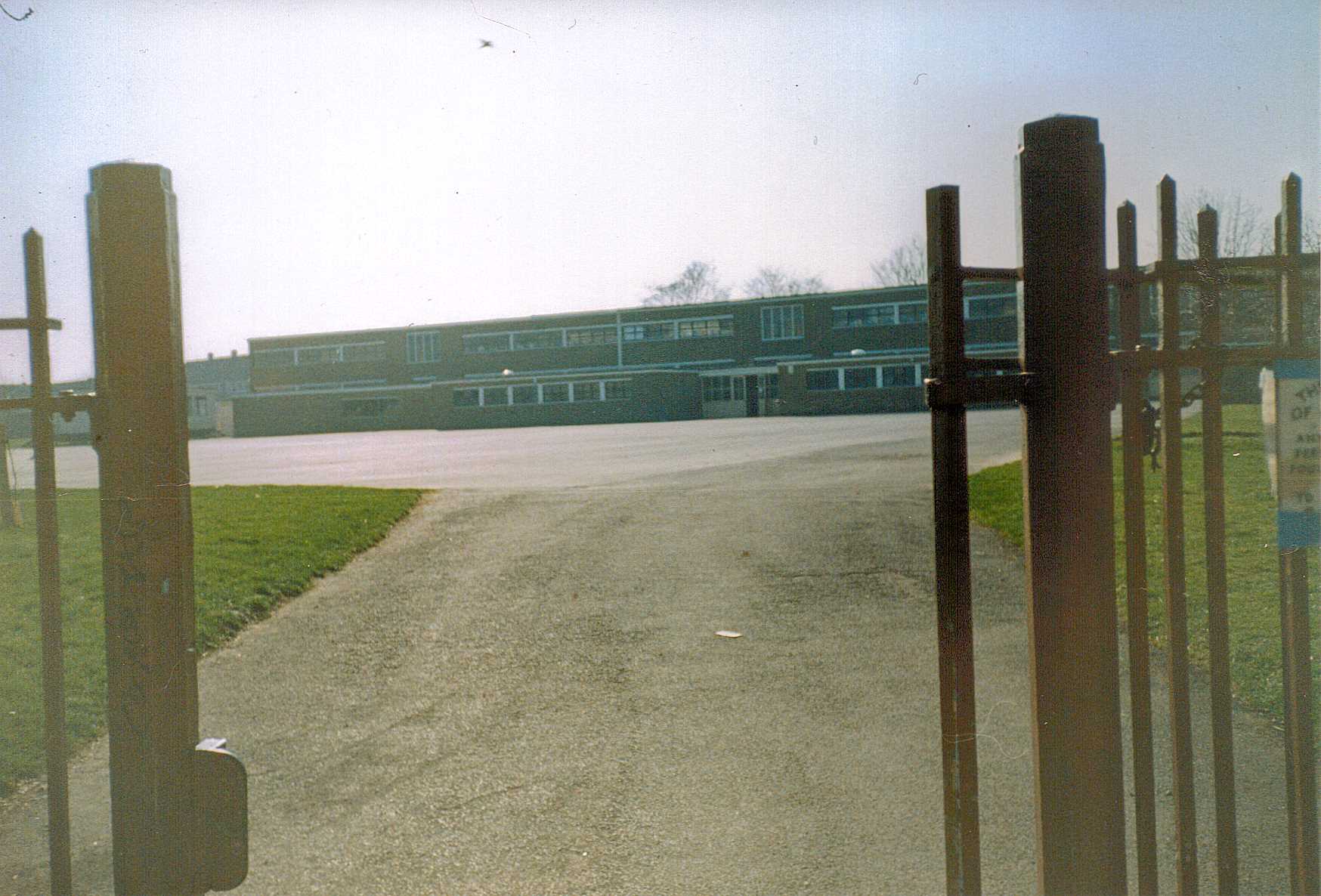
Former pupil Lorna Cook who attended the school during the early 1960s experienced happy times there. She remembers that there were eight classes in years 1-4 with two classes for each age group and classrooms on two levels. She thinks that the headmaster’s name was Mr Dawes and there were about eight teachers including Mr Chudley who became her teacher. She remembers the hall that doubled as a gym with gymnastic equipment stored under the stage and that numerous good gymnasts were produced at the school.
Lorna recalls a playing field and a playground where football and rounders were played and a free standing wall that older pupils climbed in playtime periods. Meanwhile, younger pupils skipped with skipping ropes or juggled tennis balls. Lorna felt proud when she became old enough to climb the wall while younger pupils watched in awe.
Pupils did not wear school uniforms but black indoor plimsolls were compulsory to protect the flooring. Fourth year pupils who took turns as plimsoll monitors policed the area.
Lorna remembers a nurse periodically visiting the school to inspect children’s hair for nits. She also became a member of the Brownies who met there once a week and remembers walking a long way and almost getting locked in the pupil’s toilets not realizing that she had permission to use the teachers’ toilets situated close to the hall where the Brownies met. She recalls the Cycling Proficiency Test that was taken at the school on Saturdays and that before getting permission to ride a bike to school the certificate had to be produced.
Lorna feels that the pupils were generally well behaved and recalls that when in the classroom on a rainy day she and other pupils stopped the rain coming through the windows by lining up wooden rulers along the gaps.
Almost 60 years since it first opened Wakeley Road Primary School finally closed on August 31st 2003 when Mrs Daley served as headmistress. In the years leading up to this the school roll had fallen dramatically and 41% of places were unfilled. Numbers fell to 153 pupils compared to well over 200 in earlier decades. A fall in numbers also occurred at Meredale Infant’s School so the education authority decided to discuss the future of the two schools and put forward six options. The fourth option which entailed the closing down of both Wakeley Road Primary and Meredale Infant’s and combining the children from both schools on the Wakeley Road site with a different name was chosen. The Wakeley Road site was considered to have more flexibility, more space and safer for parents to drop off and collect their children in their cars than on the road outside Meredale which often got congested.
The closure of Wakeley Road Primary School led to opposition from school governors, staff and parents. At the time of closure the school’s results had improved according to the most recent Ofsted inspection. In the National Curriculum Tests pupils had achieved 62% in Maths and 64% in English at level 4 or above. At the same time Meredale Infant’s School had been designated highly successful and the closure shocked the school governors and the staff but at the end of the day economics turned out to be the overriding factor.
After the closure in 2003 Riverside Primary School opened on the same site as the former Wakeley Road Primary School. It has a present day roll of 153 pupils.
- Details
- Category: History Articles
The Amalgamation of Rainham and Gillingham
In 1928 the border of Rainham extended almost to Gillingham due to a marked increase in population and housing. This was in contrast to 1887 when a waterworks did not exist and only a few houses were located on the main road outside the village centre in the direction of Gillingham. Rainham had doubled from about 3,000 to over 5,800 people between 1887 and 1928 which put pressure on available amenities.
During the late 1920s Rainham Parish Council began to discuss the possibility of leaving the Borough of Sittingbourne and Milton and amalgamating with Gillingham, the biggest borough in Kent with a population of 57,000 people. The main arguments were that the borders almost touched, urban powers were too expensive for Rainham alone and better public services like main drainage would become available at an affordable cost.
Main drainage became the biggest issue as existing conditions were insanitary due to the subsoil becoming excessively polluted which meant that action was desperately needed to avoid a possible outbreak of disease. The growth of Rainham had exceeded its limitations with regard to the existing sanitary conditions. After pressure from the Ministry of Health Milton Rural Council considered main drainage for Rainham at a cost of £21,231 and came up with three options. 1. The Chatham Scheme which would connect Rainham with the Chatham and Rochester sewage system with Rainham at Motney Hill Works. 2. The Rainham Scheme meaning a separate sewage system for Rainham. 3. The Gillingham Scheme to convey the sewage to the Gillingham Disposal Works for treatment.
The overall cost of the various options showed that if Rainham amalgamated with Gillingham they would get definite and affordable main drainage so in March 1927 Rainham Parish Council drew up and submitted a statement to Gillingham. The council made a unanimous decision on the issue. The summary of the statement read:
‘That the amalgamation shall be on an equal rating basis in consideration of which the Gillingham Corporation agree to accept all present and future liabilities, all charges for improvements made in the parish to be a charge on the common fund of the combined districts.’
Gillingham Council took note of this then passed their own resolution stating that Rainham should be on equal rating with Gillingham and that rates would be increased to 14/4d. This accounted for main drainage, the widening of Rainham High Street, the erection of a town hall and offices and the extension of electric lighting without any other future financial commitments. This proved to be a much cheaper and better option for Rainham than what Milton could offer.
At a meeting at the Rainham County School on Thursday April 21st 1927 the proposed amalgamation was discussed by Rainham parish council. The main argument put forward was that if Rainham remained with Sittingbourne and Milton they would have to pay the full cost of £21,231 for main drainage but if they amalgamated with Gillingham they would pay substantially less and have the widening of roads, a town hall and offices included in the cost. The Mayor of Gillingham also said that the river frontage from Gillingham to Rainham could be developed and electric lighting extended to Rainham. All the work planned by Gillingham Council for Rainham was to be a gradual process.
Questions about whether Rainham would have to change from the Diocese of Canterbury to the Diocese of Rochester and from Sittingbourne to Gillingham constabulary remained unresolved but amalgamation proceeded.
On May 1st 1927 a referendum took place in Rainham to gauge the attitude of residents towards amalgamation with Gillingham. In the first referendum ever to take place in Rainham a disappointing 27% of voters turned out. Those who voted for amalgamation totalled 565 and those against 124 resulting in a majority of 441 in favour of amalgamation. Some opposition did exist in Gillingham because of the proposed rates increase but this did not prove to be a big obstacle.
On April 1st 1929 a ceremony took place at the border between Rainham and Gillingham at Rainham Mark where a blue ribbon extended across the road. Troops of boy scouts and girl guides from Rainham and Gillingham and the Gillingham and Rainham Fire Brigades were present. Important municipal figures in attendance included Mr Treacher the Mayor of Gillingham, Gillingham fire chief Mr F White, Rainham fire chief Mr D Smith, Gillingham Division Constabulary superintendent Paramour and Sittingbourne superintendent Hoare. Others included the Lord Bishop of Rochester, Alfred Hinge the chairman of Milton Rural District Council and Rainham councillors W Holding, R Quinnell, and G Brown who had played a big part in pushing for the amalgamation of Rainham with Gillingham.
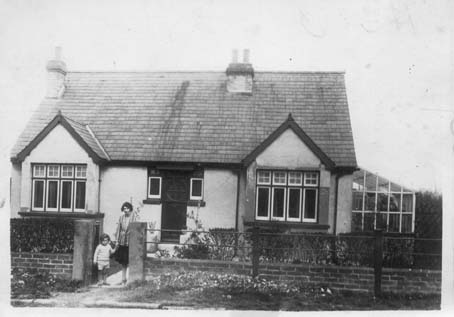
Photo of a house in Marshall Road in 1929 at the time of the amalgamation ceremony at Rainham Mark
At the ceremony the Mayor of Gillingham cut the ribbon then Mr Robert Quinnell and the mayor shook hands as a symbol of municipal friendship. This was followed by a speech from Robert Quinnell at what turned out to be a historic and moving event after which the dignitaries went for a special luncheon at the new Rainham Co-operative Society hall in Rainham High Street.
Other activities on the day included a football match between Rainham and Gillingham fire brigades on Rainham Recreation Ground while the band of the Royal Marines played music on an improvised band stand. This was followed by displays by the United Brigades including life-saving from a burning house. In the evening a firework display took place with the fiery motto ‘Success to Greater Gillingham’ lighting up in the sky. Amalgamation had finally taken place and Rainham remains part of the Borough of Gillingham today.
David Wood.
- Details
- Category: History Articles
The Rainham Whirlwind of March 1924
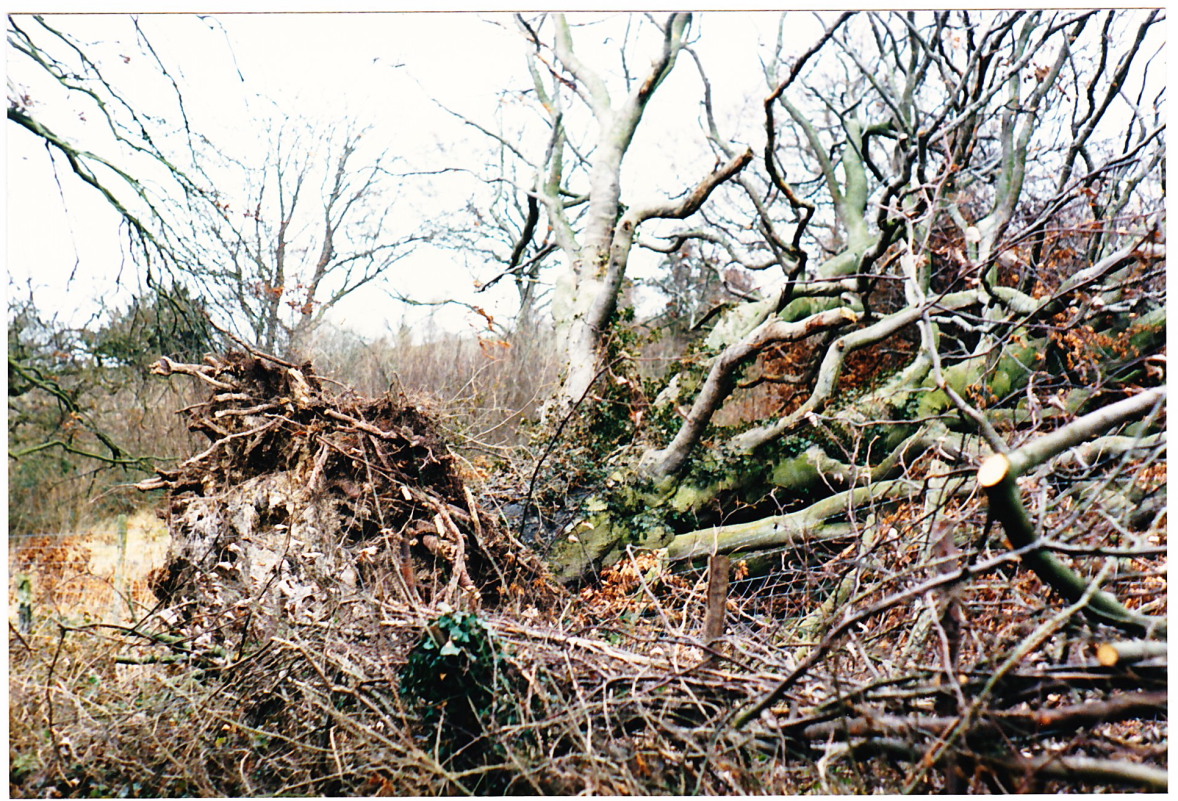
Many present day residents of Rainham will remember the great hurricane of 1987 that caused a considerable amount of damage in the area but few will remember the whirlwind that hit the centre of the village in 1924.
According to the East Kent Gazette of March 8th 1924 black clouds covered the sky and created an eerie semi darkness late in the afternoon of Friday March 1st. A powerful spinning whirlwind followed this and struck top end of Station Road with terrific force as it moved across in just seconds but caused considerable devastation.
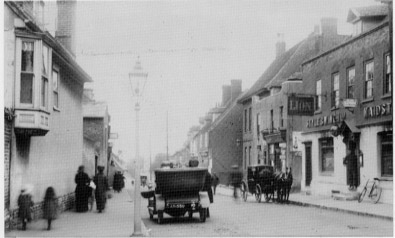
Rainham as it would have appeared around 1924
With the vortex centred on the corner of Longley Road and Station Road, Mrs Clark of Ramsey House described it as ‘quick as lightning’ while Mr A Stinton, a builder and contractor who lived on the other side of the road said: ‘It was for all the world like the roar of an express train.’
The whirlwind destroyed both chimney stacks on Ramsey House and that of Mrs Kitney’s house almost opposite Longley Road. Bricks were hurled through the air by the wind, these smashed windows and landed on the roofs of other houses in the vicinity. The mass of debris that fell sounded like a bomb exploding according to some eye witnesses.
A house belonging to Mrs C Clark in Station Road had the chimney stacks blown off the roof and suffered other damage. Mrs Clark’s parents who were in the house at the time were left terrified by the commotion but were unhurt. Mr F Shepherd of 38 Station Road was taken up in the air and hurled across the road by the force of the whirlwind.
‘I had come to my gate when the storm burst and I was sucked into the vortex, blown across the road and thrown down,’ he explained.
Mr Sheppard only suffered a cut wrist but others were not so lucky like Donald Ede a horse and cart driver who worked for grocer Mr Quinnell. He was driving a horse and cart packed with groceries down the top end of Station Road when the sudden arrival and power of the whirlwind caused the horse to bolt and crash the cart into a lamp post. The cart turned over, the shafts were snapped and groceries were strewn across the road and ruined in the heavy rain while Donald Ede was thrown off his vehicle and onto the road. He sustained a cut face and head which needed medical attention and he had to have a week off work. The damage cost Mr Quinnell £50. His manager Mr Rose cleared up the mess.
Rainham vicar Reverend Ball may have been the most fortunate to escape death or injury. He happened to be shopping in Station Road when the whirlwind struck so he took shelter in a doorway. Almost immediately chimney stacks from houses crashed down on the road and pavement just a few feet away from him but he didn’t get struck so he luckily remained uninjured.
The Salvation Army Hall in Station Road, a timber building had one side blown off its foundation by the whirlwind. Mr and Mrs Russell were inside at the time. When the whirlwind began Mr Russell looked out of the window just as the upper part was suddenly blown in and the glass hit him in the face. The hall got so severely damaged that it could not be used for some time so services had to be held in Rainham Church Hall.
Just below the Salvation Army Hall the whirlwind blew over thirty yards of brick wall and a chicken house lifted in the air and deposited in Parsonage Meadow. Another house owned by Mrs T Kitchingham in Station Road also had its roof lifted, the wind blew a chimney pot off the roof and through a greenhouse. In Longley Road a row of houses had flames belching from their chimney pots as the wind blew flames from fires in the houses up the chimneys causing the soot to ignite which lit up the semi darkness of the late afternoon sky. Window panes in the same houses were smashed.
Because of torrential rain a lot of people sheltered under the veranda of the Co-Operative Stores at the top end of Station Road opposite St Margaret’s School. The force of the wind lifted the roof of the building from its supports which caused panic with women and girls screaming with fright but nobody got injured.
As the whirlwind spun across central Rainham slates were blown off houses in Ivy Street and outbuildings at the back had roofs blown off while farther along at Moor Street Mr and Mrs Castle’s house got so badly damaged that they had to vacate the premises and sleep at Westmoor Farmhouse for the night by courtesy of Mrs Scott.
At Westmoor Farm some damage occurred mainly to outbuildings while a large bough from an elm tree crashed on to the roof of a fruit store and completely wrecked the building incurring an estimated £100 worth of damage.
After the whirlwind had moved away and the storm finished Mr Stinton of Station Road and a gang of building employees cleared up the mess in Station Road where most of the devastation had taken place while lots of Rainham residents flocked to the area to view the damage in the evening. Glaziers and slaters arrived the next day to repair the roofs and windows as Rainham reverted back to calmness after the most powerful whirlwind to hit Rainham in living memory.
- Details
- Category: History Articles
The Rainham Seaman Torpedoed on Two Ships on the Same Day in 1914
Originally from Portsmouth where he joined the navy in 1888, John Brading moved to Rainham in 1906 and continued his naval service.
With the outbreak of the Great War in 1914 Brading served on HMS Hogue. On September 20th his vessel along with HMS Aboukir, HMS Cressy and HMS Euryalus were sent to patrol the Broad Fourteens, an area located near the Dutch and Belgian coastlines to look out for German naval war vessels. They were not escorted by destroyers which made them vulnerable to submarine attacks.
On September 20th HMS Euryalus turned back to Sheerness because of an aerial problem while the other three cruisers continued their journey. On September 22nd German submarine U9 spotted the cruisers and fired a single torpedo that struck HMS Aboukir on the port side causing heavy flooding. The vessel capsized after 25 minutes and sank five minutes later. While this was happening Aboukir’s captain Drummond ordered the crew to abandon ship.
While the Hogue and Cressy were preparing to pick up survivors from the stricken HMS Aboukir they were also torpedoed. U9 fired two torpedoes at the Hogue and one of these hit her amidships which flooded the engine room. The second torpedo struck a few feet from the first followed by a third explosion caused by an ignited magazine which resulted in the vessel listing over to forty degrees as the sea poured in on the waterline amidships. Realizing that the ship was sinking John Brading jumped into the sea with other members of the crew and swam towards Cressy as fast as possible to avoid being sucked under the water by the vortex of the sinking Hogue.
Soon after Brading had climbed aboard the Cressy which had moved in towards Hogue to rescue survivors, it was also struck by a torpedo in the starboard boiler room and listed but did not start sinking immediately. When a second torpedo struck and the vessel began to keel over crew members began jumping overboard which included Brading. He jumped into the cold sea for the second time that day where he remained for four hours bobbing up and down in high waves amongst dead bodies and about 2,000 sailors struggling amongst a mass of wreckage and pieces of wood to which most of them clung. Many were paralysed with shock and cold while they waited to be rescued. In the meantime, the triumphant German submarine U9 moved off towards the German port of Wilhelmshaven because all six of its torpedoes had been fired and the captain was fearful of British destroyers arriving in the area. One 493 ton U-boat with a crew of 28 had destroyed 36,000 tons of three British cruisers in less than 90 minutes which served as great propaganda for the Germans.
Brading and other survivors were rescued by the Dutch merchant ships Flora and Titan and British trawlers JGC and Coriander before a force of light cruisers and destroyers arrived from Harwich and escorted the survivors aboard the British vessels to the English port of Lowestoft while Flora and Titan sailed with survivors to Holland. In total 837 men were rescued but 1,459 died. Many of these were young cadets and reservists. The incident caused an outcry in the UK at a time when submarines were not seen as a serious threat so it established the U-boat as a major threat in warfare and questioned the invincibility of the Royal Navy.
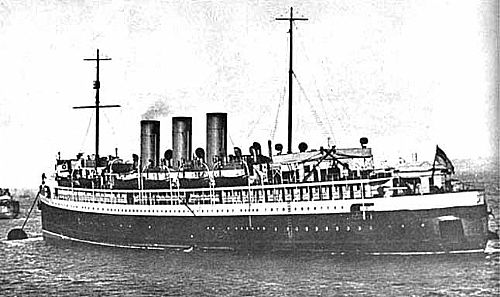
Photo of HMS Princess Irene, a similar ship from WW1.
Because of the psychological effects of his experiences on September 22nd from which he never fully recovered, Brading worked at Tilbury Docks as an armourer assisting with the arming of liners for the remainder of the war then retired from the navy after the conflict had finished.
In 1920 Brading moved to Edwin Road in Rainham where he lived with his wife and two children. He later became a trustee of the Rainham Methodist Church in Station Road where he became well-known for organising children’s social events, he worked with the Royal Naval Temperance Society and he also became a playing member at Gillingham Bowls Club. He was left with only memories of that fateful day on September 22nd 1914 before he died aged 68 in August 1939.
David Wood.
- Details
- Category: History Articles
Memories of Fairview Junior School
I attended Fairview Junior school from 1977 to 1981. The headmaster was Mr Queen and the teachers I remember were Mrs Terry, Miss Kitchener, Mr Roome, Mr Baker, Mr Thomas. The school had an outdoor swimming pool which was always freezing despite a solar blanket being purchased to try to warm it up. I had very enjoyable school days at Fairview with lots of happy memories and left in 1981 to go to Rainham Mark Grammar school.
School dinners have changed massively since the 1970s, I recall horrible goulash but loved the gypsy tart and apple. You'd never find salad served in school with peanuts now but for some reason nut allergies weren't a problem back then. Occasionally the school dinners were served from the church hall next to the school. This wasn't all the time so I'm unsure now why this happened.
The school playing field seemed massive as a 7 year old and I remember it seemingly taking ages to get from one side to the other when playing games out on the top field.
Every summer the school had a June Fair to raise money for the PTA, the photo below is of the Fancy dress competition in 1981.
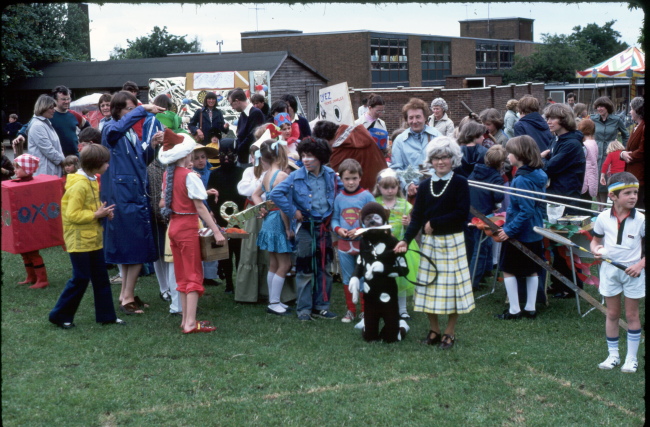
Photo of Fairview School June Fair fancy dress competition, June 1981
- Details
- Category: History Articles
Subcategories
Historical life Article Count: 8
Historical life in Rainham
Rainham Life Article Count: 11
Rainham Life
Local Events Article Count: 52
Local Events
Photos Article Count: 167
Photos
Action Forum Article Count: 260
Action Forum is a free monthly magazine that is distributed to the Rainham area covering Wigmore, Parkwood and Hempstead as well. This archive covers old copies of the magazine dating back to its initial publication in 1969 and give a fascinating glimpse into life in Rainham over the last 50 years.
Link to Article Index - Action Forum Index - Photos and Articles from 1969 onwards