History of Rainham Kent, Old Photos and Life in Bygone Times
Ancient Archaeology Finds in Rainham Kent
During the construction of the Churchill Retirement living housing project on the A2 various remains have been found that date habitation of the area back to the early Iron Age, some 3000 years ago. Sandy Fleming from Rainham News visited the site to find out more
Watch her YouTube video on the discoveries here
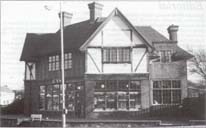
Churchill Retirement Living statement re Rainham archaeology dig – November 2021
“Our site in Rainham is of historic interest due to its location, so having liaised with the relevant authorities we brought in a team of professional archaeologists and temporarily paused work on the site while they carry out their important work. We are pleased to be supporting this project and very interested to see what the team discovers.”
Famous Upchurch People by David Wood
Over the centuries many Upchurch residents have become well-known within the village, and a few have gained fame farther afield.
The King’s Carpenter
Hugh Herland became the first recorded Upchurch resident to gain widespread fame. Living in Upchurch from 1378 to 1391 he became chief carpenter to Richard II and designer of the hammer-beam roof of Westminster Hall, the largest medieval timber roof in Northern Europe. Considered a masterpiece, this became his greatest achievement. He also completed work at Rochester, Leeds and Winchester castles, the Tower of London, Canterbury Cathedral and the tomb of Edward III’s wife, Philippa of Hainault, in Westminster Abbey. Herland initially worked with his father William, also the king’s carpenter, but on September 28th, 1370 the king rewarded Hugh with ‘pesage of wools’ in Queenborough (which established him as a member of the merchant class) and also with a tenement in the City of London. Herland’s wife Joan also came from Upchurch but the couple eventually moved to Kingston in Surrey. Herland died in 1405 but a stained glass window featuring him exists at Winchester College Chapel.
The Crackerbarrel Actor
Actor, James Robertson Justice lived in Greylag, Ham Green during part of WW2 after getting wounded. A big man with a beard and a booming well-spoken voice, he was also highly-educated, with two doctorates. Being interested in nature and a keen ornithologist, Justice soon settled and was often accompanied by naturalist and wildlife TV presenter, Sir Peter Scott as he ventured onto the saltings for bird watching. He drank in The Crown, where he was considered an extrovert and always had an audience. He periodically walked around the peninsula dressed in a kilt playing the bagpipes, bathed naked in the river with lady friends from London and openly bathed in a tin bath in his garden. The village children called him ‘Crackerbarrel’ because he appeared in media advertising said cheese. However, he got into trouble with Sittingbourne Magistrate’s Court for breaking blackout law.
Village gossip said he was a German spy after a torch was spotted flicking on and off from the bedroom window of Greylag at night and Justice received a caution. After Upchurch, he gained fame as an actor in the popular ’Doctor in’ films. He also appeared in other films: Moby Dick, Scott of the Antarctic, The Guns of Navarone and Chitty Chitty Bang Bang. Justice taught Prince Charles falconry whilst living in Scotland becoming a personal friend of Prince Philip. He was also rector of Edinburgh University and stood as a Labour candidate for North Angus and Mairns in the 1950 General Election.
A blue plaque bearing his name is attached to the front wall of Greylag at Ham Green in memory of him.
David Wood
Walking along Woodside by Geraldine Tomlin
Woodside has always been a very busy road. In 1912/1914 land was sold off in plots of 200ft x 40ft costing £25 per plot and the road "made up" in 1925/1926 by Milton Parish Council.
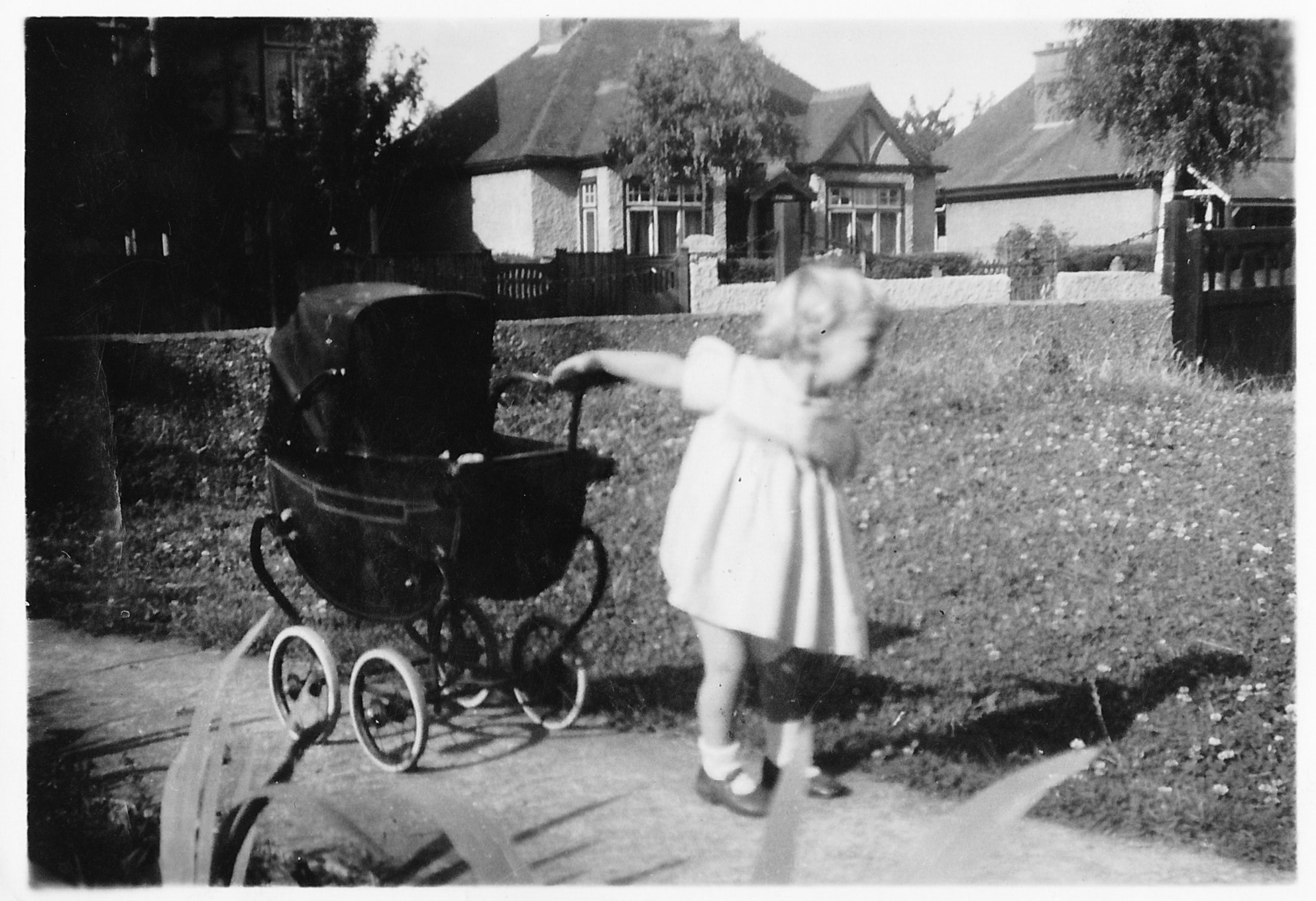
Photo below taken in 1946 of Cheryl Domoney in the front garden of 28 Woodside looking into the street and houses opposite, numbers 29 Woodside (semi-detached house) and 31 Woodside (Bungalow).
The corner house at Hoath Lane was originally a stopping-off tea place for townpeople coming to their country plots. It later became a green- grocers. Opposite, was waste ground before the Spyglass was built in the ‘30s, and a few doors down a tennis court where players could also get icecream. Fruit trees covered most land along to Bredhurst Road and on that corner 'old iron' was collected for the war effort. Opposite was a house called The Parsonage, where the Priest-in-Charge of the Mission Hall lived. On the west corner of Springvale a small building sold fresh fish, later becoming Beale’s butcher's. We had a resident policeman and his family living on the south side of Woodside. The Smallholders Club, a well -known institution, was originally for exchanging or selling home-grown produce, hence the name. The first building was a tin shed, before Springvale was developed.
The Post Office, another well-known place since the early ‘30s, also sold petrol and paraffin oil. It was small but had all sorts of pots and pans hanging from the ceiling. Sweets in glass jars were ready to be weighed up - "An a'peth of those, please" (an a'peth was a halfpenny, pre-decimal). Some bought a farthing’s worth (quarter of an old penny)! It was always busy and friendly, as it is today. Along a little further, a footpath stretched from Woodside to Durham Road known as 'the six foot pathway' - said to be six foot wide… and very muddy! Opposite the Post Office was St Matthews, originally built as Wigmore Mission Hall in 1925. It’s beautiful sanctuary in dark oak opened up on Sundays to become the church. This was modernised with lighter-coloured wood around 1935-1937 (the carpenter lived in Springvale), but with a growing population it was necessary to extend out front in ‘52. Now the Howard Memorial Hall, it is the Lodge of the Masons and St Matthews
relocated to Drewery Drive.
Towards the Queen's Head, north side, a family opened up their front room as a general store and a little further along was a nursery full of produce in greenhouses, the owner living in Maidstone Road. On Woodside's south side, where the Osteopathic clinic now is, the front room held a Haberdashery, somewhere I loved and the next door garden was full of daffodils every year. The site of the Queen's Head was another patch of waste land, opposite was a shop which became Tarry's and there was a red telephone box at either end of Woodside. I have lived here for 93 years. In my younger days there weren’t many residents but everybody knew everybody. Modern Woodside is so different but we have a, much needed, pedestrian crossing thanks to our Mayor.
Let us know what I have missed out!
Rainham Station - History & Photos through the Years
It was first suggested that a railway service be provided for Kent in 1824 - a prospectus was drawn up and accepted in 1825. The topic was raised in 1832, again in 1835, and in 1836 the South Eastern Railways Act was passed. However there were already short distance railways operating - the Whitstable Canterbury being the nearest to this district. The South Eastern Railway when it eventually appeared had government blessing - a point which must have weighed heavily in its favour when engaged in battle with rival companies. One of the first to be merged was the Thames & Medway Canal & Gravesend & Rochester Railway in 1849. Chief rivals were the East Kent, which became the London, Chatham & Dover Railway operating from Victoria and the South East & Chatham Railway out of Charing Cross. A main line to Rochester started at Fenchurch Street and proceeded by Tilbury, the ferry and Gravesend.
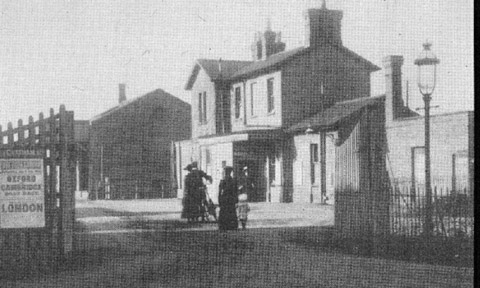
Below: Rainham station in the late 1800s, probably around 1890
The line from Chatham to Faversham was opened in January 1858 (the link from Chatham to Strood opened in March). With the extension to Faversham came the stations at New Brompton (Gillingham) and Rainham Newington. In 1862 Newington got its own station. One comment at the time the railway opened up in Kent was that 'all the parishes became very populous and places which were once quite rural are now covered with houses for the toilers of the metropolis'. Transport was now cheap and easy enough to be available to the ordinary people, and thus was born that section of the population known as commuters.
In 1858 it was only a single track but fortunately the Chatham and Gillingham tunnels had been built sufficiently wide to allow a double track later without the need for major rebuilding. The three major companies all had bridges over the Medway at various times and it was not until 1927 that the re-alignment of the track made the South Eastern bridge the sole survivor.
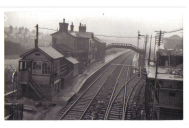
There had been suggestions to close Rochester and Chatham stations in the interests of economy much to the delight of Gillingham Council who saw a very rosy future for New Brompton. It would have been almost impossible anyway since Chatham was a major station and the only way to Rainham involved changing at Chatham. June 1899 saw the amalgamation of the three major railways into the Southern Railway - which it remained until 1948. One attraction in 1899 was the Continental service out of Victoria via Queenborough to Flushing.
Below: Rainham station in 1966, notice how little has changed from the 1890s which was the original station building from 1858. 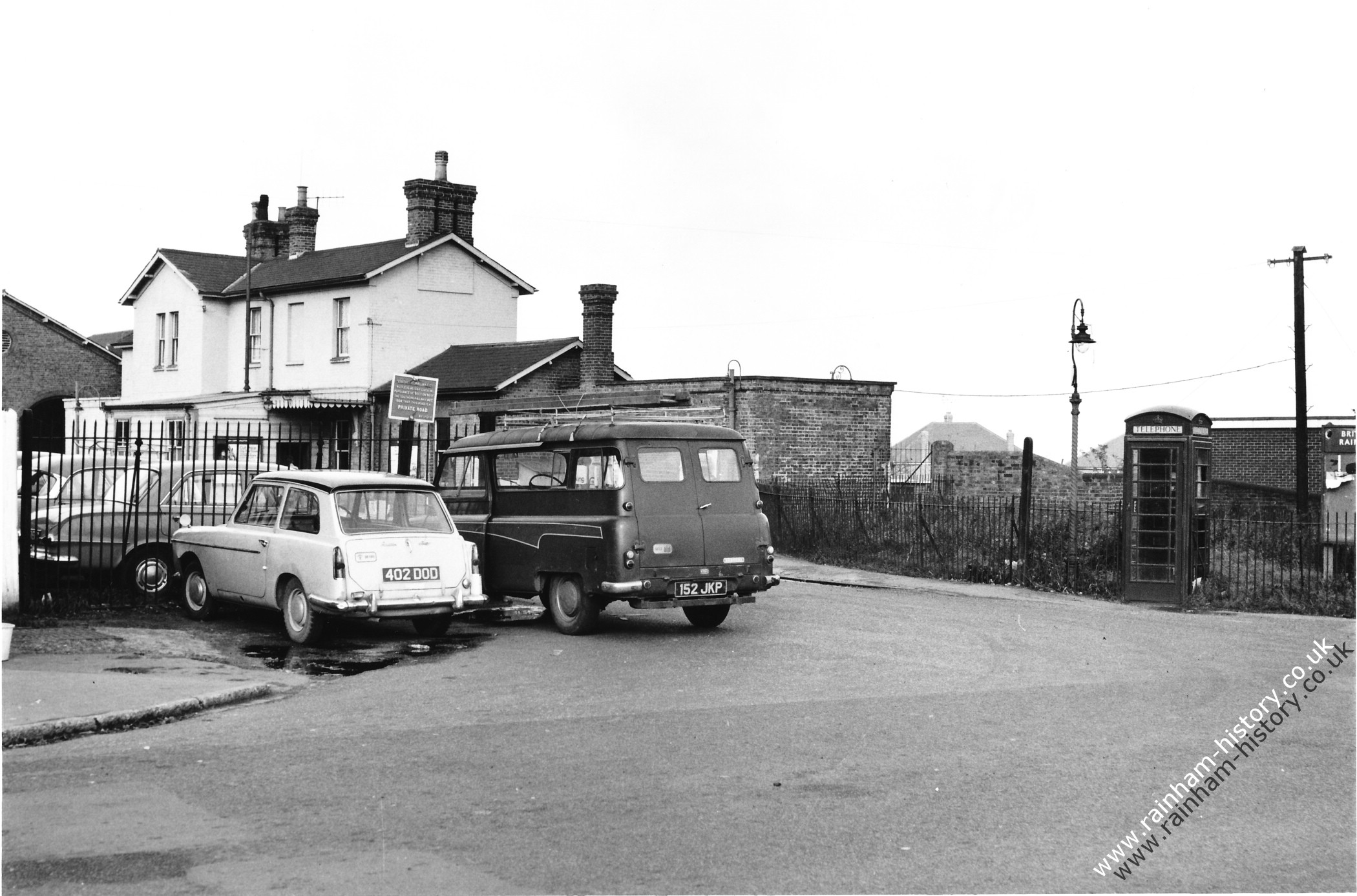
In 1944 a flying bomb fell on a bridge between Rainham and Newington - just twenty yards in front of the Victoria train, killing eight and injuring sixteen passengers. After British Rail took over in 1948 the suggestion was made that Rainham station be renamed 'Gillingham East'. This caused such an outcry that the idea was quietly dropped in much the same way that the Premier Inn on Maidstone Road was originally proposed as Gillingham East. Then in 1958 the first electric train ran to Rainham. There was no ceremony - it was one of five pilot runs and the only passengers were electricians and engineers.
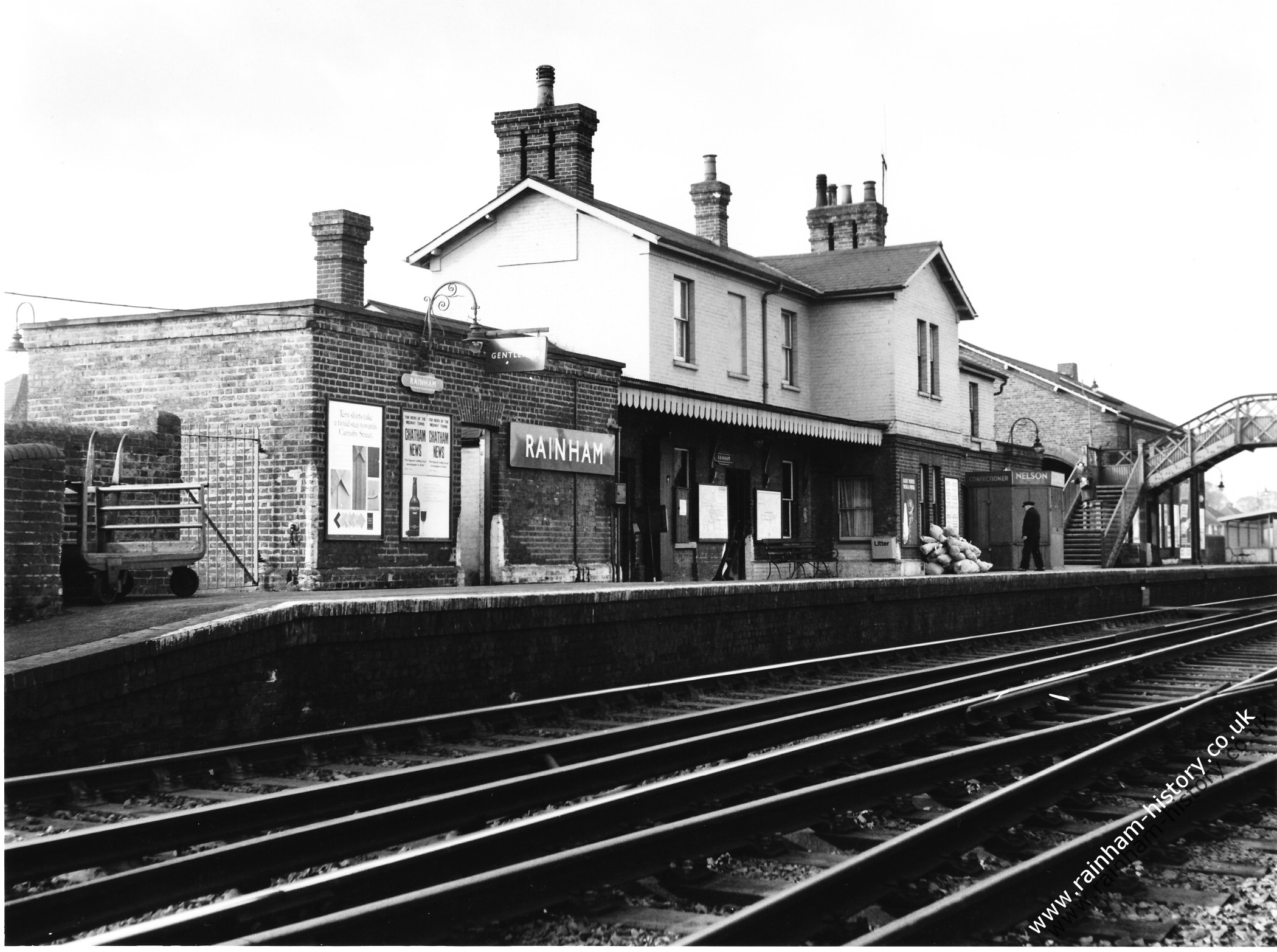
The above photo was taken in October 1966 prior to the rebuilding of the station in 1970 which was now carrying more than 2,000 commuters each day as Rainham expanded. The new station was in place for the 1970s and was now a low single storey building.

This building lasted much less time than the original and was redeveloped again in 1990 to the current building.
You can see the newly built commuter car park in the distance below along with the undeveloped site on the corner of Solomon Road.
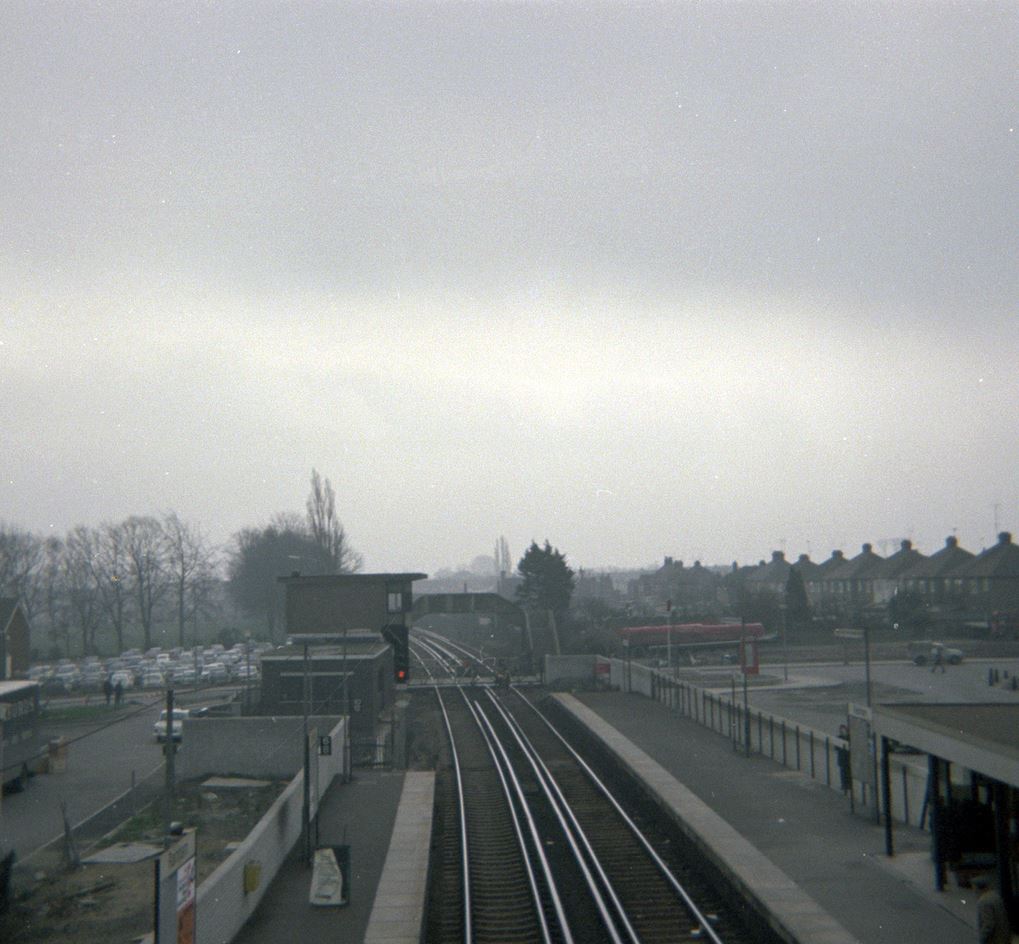
The most recent expansion was the additional of platform 0 in 2015 that enables Thameslink trains to start from Rainham.
Below: Rainham station in 1980

Below: Rainham station 1987 during the snow

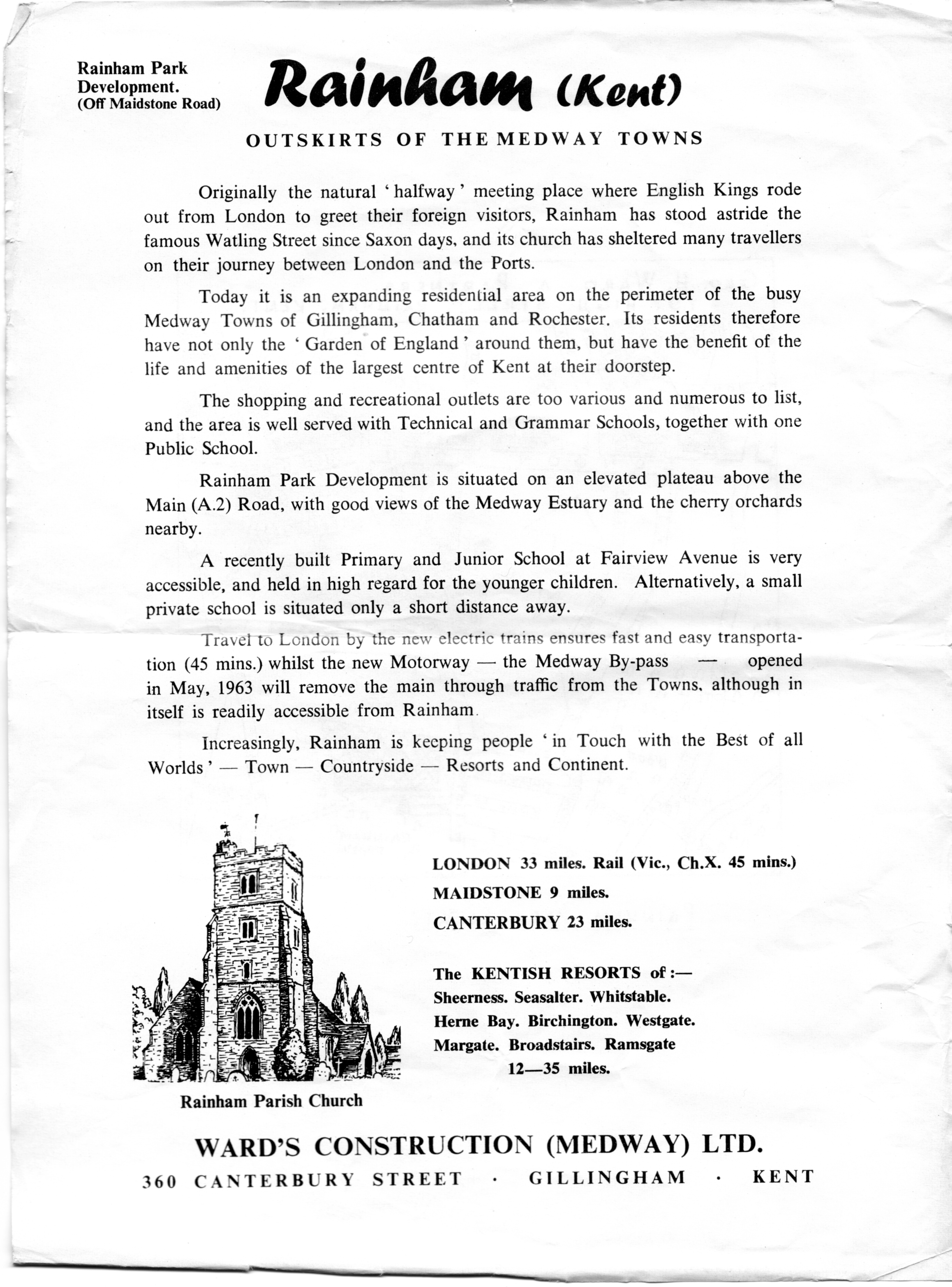
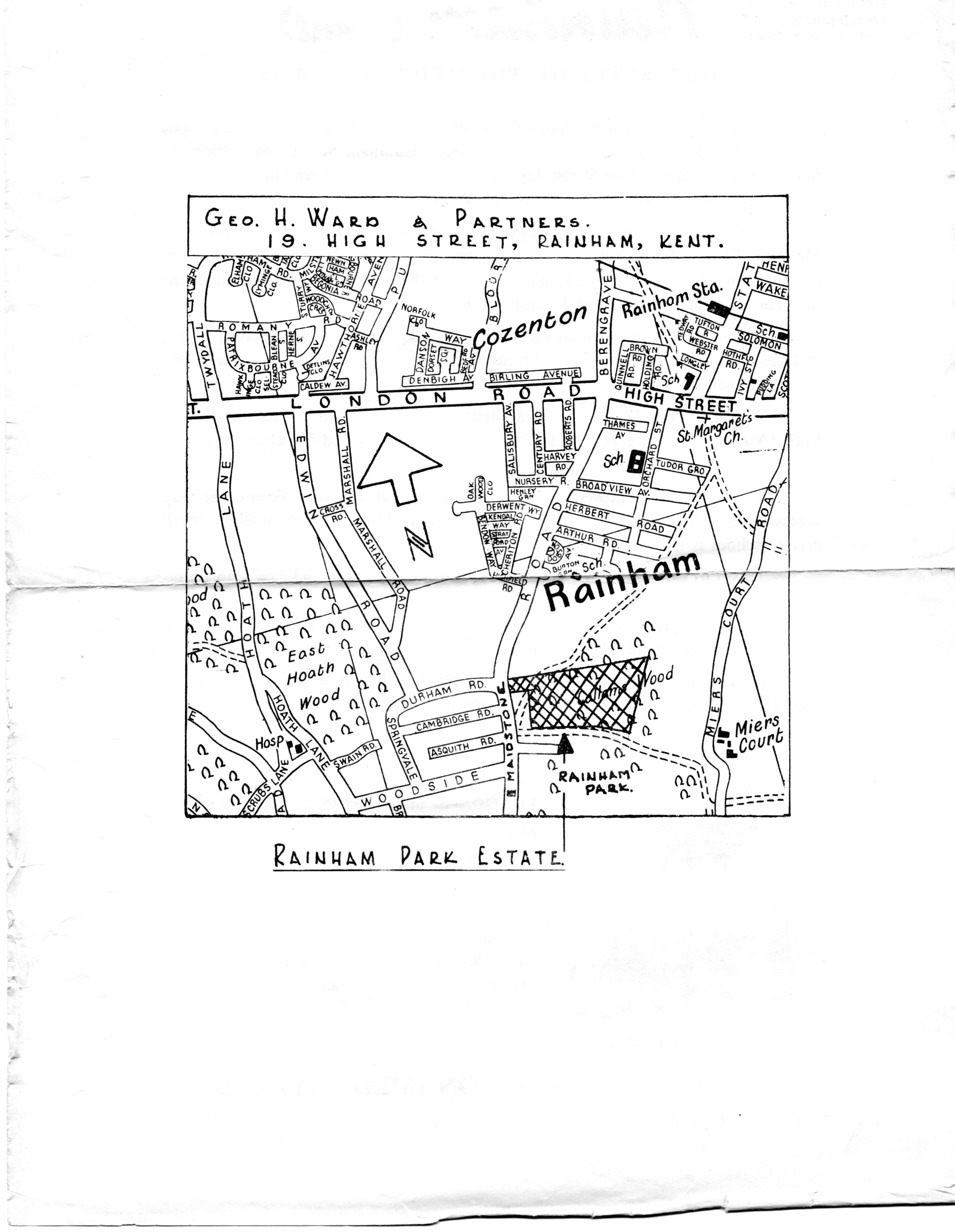
Rainham Park Development - Kenilworth Drive - 1965 Parkwood Estate Lonsdale
These photos show the maps and promotion for what was called the Rainham Park development which was part of Parkwood overall plan. This consisted of the roads opposite Durham Road off Maidstone Road Rainham and linked up with Lonsdale Drive when that was constructed. Kenilworth Drive, Lonsdale Drive, Tanker Hill, Sunningdale Drive were amongst the roads as part of this development. This promotional leaflet for Rainham Park was approximately 1965 before most of the development had begun. At the time there was no road connecting the ends of Broadview Avenue, Herbert Road or Arthur Road which were part of the Broadview Garden estate. Read here about Building the Broadview Garden Estate inc Herbert/Arthur Road
Interestingly the road layouts pictured were actually different when built. Lonsdale didn't end opposite Asquith Road but joined the stump road shown between Woodside and Asquith Road which is now Deanwood Drive and ran more parallel to Mierscourt before it connected.
Many thanks to Craig Blum for providing these scans as well as the Rainham Park house brochures.
RAINHAM’S CORONATION CELEBRATIONS by Freddie Cooper (part 1)
RAINHAM’S CORONATION CELEBRATIONS - Part 1 from March 2002 Action Forum
Many editors, both national and local, have commented upon the apparent apathy by our people toward celebrating the Queen’s Golden Jubilee and I have been comparing this with the coronation celebrations in Rainham in 1953. First I tried to remember how we lived at that time and I was surprised at the changes which have occurred. The population of Rainham was around 10,000, probably only a quarter of that now and six years before we had emerged from a damaging and exhausting war. Certain foods and particularly building materials were still rationed and licences had to be obtained even for new wood to carry out repairs. There were no mobile phones and only a low percentage of residents had static telephones, most of which were shared lines. The main means of communication was still by mail. Council house building was increasing but licences for individual private development were very limited, there was no estate building but a three bedroom pre war house could be bought for under £1,500. A primary school had been established in the huts on the old Anti Aircrafi Battery site in Maidstone Road as there was no school for infants and juniors south of the . accommodate the high birth rate of the ‘baby boom’ years immediately after the war. Some of the army huts were still occupied by squatters. The land between Rainham Mark and Darland Avenue on the south side of the A2 was still owned by the War Department and mainly unused. There was no Rainham shopping centre, no supermarkets or out of town shopping. Parkwood was still an attractive woodland area with a steep grassy bank in the middle known to us as ‘The Den’. I doubt if more than a third of householders had a car but I had recently acquired my first vehicle, a Scwt Ford van with a bus seat in the back for my 6-year-old son and all cars were coloured black. Most people still travelled to work by bus or bike and life was far from easy for many post war newly weds who still lived with in-laws or in ‘rooms’. Partners living together would have been frowned upon. I found a ycopy of a letter which I wrote to the local paper nphasising the need for a by-pass, the M2 was "eventually opened in 1963, but no link road was included in the original design so that had to be fought for to avoid even more tmffic travelling along the A2 through Rainham High Street en route to the link roads in Chatham and Sittingboume. These were the circumstances under which we were living when a Public Meeting, which attracted about 100 residents, was called some eight months before the Coronation. An organising committee was then formed with myself as Chairman, which is why I still have a file to which I can refer. Mr R. Lucas, Manager of Rainham Co-operative Society, was Vice Chairman, Mr J. Lewis, Manager of Barclays Bank, became Treasurer and the Organising Sub-Committee was chaired by Dr G.O.S. Reid. There were 51 organisations covering many interests in Rainham at that time and some of them arranged fund raising events to cover anticipated expenditure.
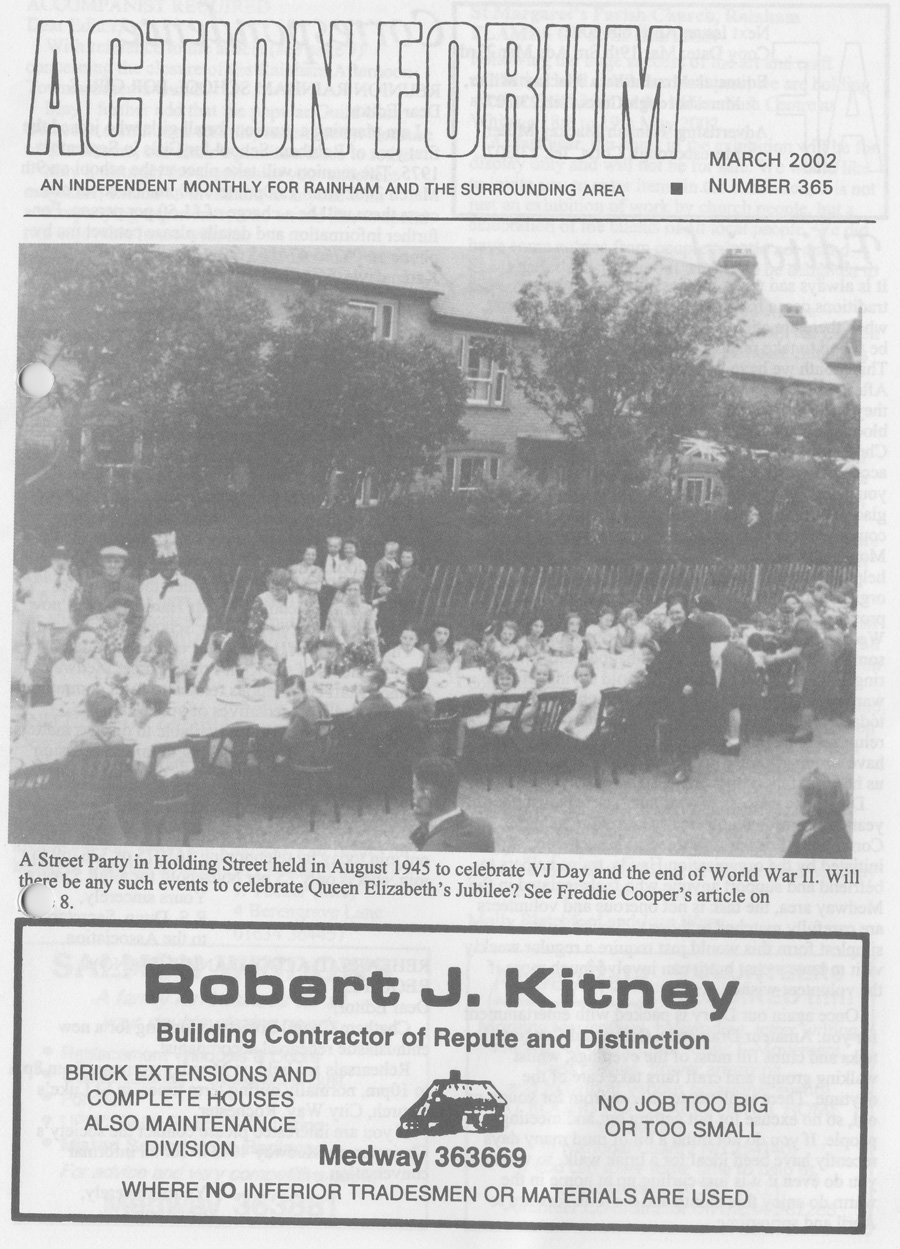
Photo of Coronation Party in Holding Street Rainham in 1953
The events arranged for the great day had to take account of the increased interest in television as this was the first great national attraction since its introduction and many people bought their first set for the occasion. I remember buying a second hand 9-inch set which had to be viewed from a few feet but even that was a great advance on wireless. It was assumed that many residents would wish to view the actual ceremony and subsequent events until early afternoon so events on 2nd June started around 2.30pm. The Carnival arranged for Wednesday 27th May had to be cancelled twice before it was eventually held and some of the events arranged for Coronation Day were also curtailed by inclement weather, which was disappointing to many who had laboured to ensure a happy and successful day. A copy of the programme had been delivered in advance to every household and I forget which events had to be cancelled or restricted.
The RE Cadet Band opened by playing as they marched along various roads leading to the Recreation Ground. Other events included the Peter Pan Starlets, London Mime Theatre, Tug of War Heats, and a Sheep Dog Demonstration. It was anticipated that over 1,000 childrenwould attend the free tea which was to be followed by a Comic Football match, Maypole Dancing and The Fueding Dudes with Hill Billy songs. Free tickets were provided for children to enjoy pony rides, and all types of side shows. There were 23 races for children aged from 5 up to l6, the youngest ruiming 80 yards and the 15 and 16 year olds had both cycle and one mile track races.
The Rainham County Secondary School from Orchard Street had a House Relay for a Shield whilst all other lst, 2nd or 3rd places received money There were many street parties whilst houses, shops and street standards were decorated, Gillingham Council also helped by erecting Coronation Arches across the A2 at West Moor Farm and outside the Vicarage which at that time was next to the Post Office. The day ended with a dance in the Co-operative Hall. The population seemed to be captivated by the Coronation of our young Queen and almost everyone entered into the spirit of the occasion. Rainham was proud to play its part.
P.S. Whilst typing this article a radio announcement has confirmed that the Salisbury Avenue NWA and Residents Association has cancelled its proposed Golden Jubilee celebrations due to lack of interest and the cost of insurance! However, I am pleased to hear that a Community Project jointly with the Rainham Theatrical Society and St Margaret’s Church are planning some celebrations.
Freddie Cooper
March 2002
Rainham Shopping Centre Problems 2002
THE PROBLEMS OF THE SHOPPING CENTRE 2002
The news of the enforced closure of 10 shops within the Rainham Centre has obviously caused consternation among the proprietors and great concern among the public at large. It is understood that those who have received notice from the landlords are Barry’s Fruiterers, Morecut Butchers, Rainham Health Food Shop, Quidsaver, Boots the Optician, Bookmark, Xpressions, Ascot Flowers and Pet Supplies, who all expect to be closed for about 28 weeks.
Some will obviously try to relocated as close to the centre as possible but the immediate problems for shop tenants and their staff is most worrying and the long term impact may also be far reaching. The letter to ‘all tenants’ dated 14th March said that ‘following the results of soil investigation it has been established that remedial works are required to the centre which would commence on 1st May’. Of course such a disruption in the pattern of Rainham shopping has given rise to much conjecture in fertile minds particularly as to the cause of the problem which has not been made public and only a minority of residents will remember the buildings on the site pre war.
I was fortunate to mention the situation which has arisen to the well known retired builder Mr Len Bridge only to find that he was actually born in one of the three cottages which is now the ‘Nationwide’ shop so has an intimate knowledge of the area. His address was then number 14 London Road and if one views the buildings from the opposite side of the road it can be seen that the original external structure of all three cottages has been retained with shop fronts which have been altered over the years. Mr Bridge reminded me that just west of the cottages was the blacksmith’s forge thought then to be operated by Bill Arraman. Many of us hung over the half door to watch horses being shod or iron work being made or repaired. Len and I agreed that one never forgets the smell of burning horses hooves as the shoes were fitted and the value which both the smithy and the wheelwright next door were to a mainly agricultural community.
These buildings together with a large white ex farmhouse next to the forecourt of Springates the wheelwrights, which was occupied by Mr Bodiam who ran the corn chandlers now Meridian Spice restaurant, covered most of the present High Street entrance to the shopping centre. The other shops towards Station Road with the exception of Barclay’s Bank have mainly the original structures with new fronts. Mr Bridge recalled that all the old buildings would have had cellars, wells, cesspools and underground water tanks to collect rainwater. He considered that the wells were probably 50 to 60 feet deep, so the water courses were fairly close to the surface although now with heavier extraction they may be lower. The fields at the rear of the properties were young orchards pre war but the land may have previously been used for general agricultural purposes for which farmers dug large holes to obtain chalk to spread on the land and some of which were then used for refuse disposal purposes. The other problem which has caused constructional difficulties locally relates to clay faults in the chalk sub soil which have to be excavated and refilled with concrete as otherwise the clay will expand and contract in a different manner from chalk.
A very large hole once appeared in the pavement in front of the shop next but one to the western corner of Holding Street and another developed outside the shops opposite to the bottom end of the old Chapel Lane (which is now the cul de sac just east of Mierscourt Road). Len seems to remember a hole suddenly appearing in the car park and most older residents had their own stories of sudden subsidence and the reasons therefore. Perhaps the most dangerous was the one that appeared on the railway line just east of Berengrave Lane which caused a derailment. l have a photo of the trucks. No one locally seems to be willing to explain the actual cause which has necessitated ‘remedial works’ but one hopes that this will become apparent as it could have implications upon other buildings in or around the area. In the meantime it must be pure conjecture. Whenever a subsidence occurs north of the Church it is inevitable that the legend of Bloors Place tunnel is resurrected.
Freddie Cooper 25.3.02
Post War Prefabs in Rainham Kent
This article about prefab (pre-fabricated houses from after the Second World War WW2) is based on information originally published in Action Forum in 2021 and started with the August 2021 cover photo taken on the site of what is now Clematis Avenue (off Fairview Avenue) Wigmore.
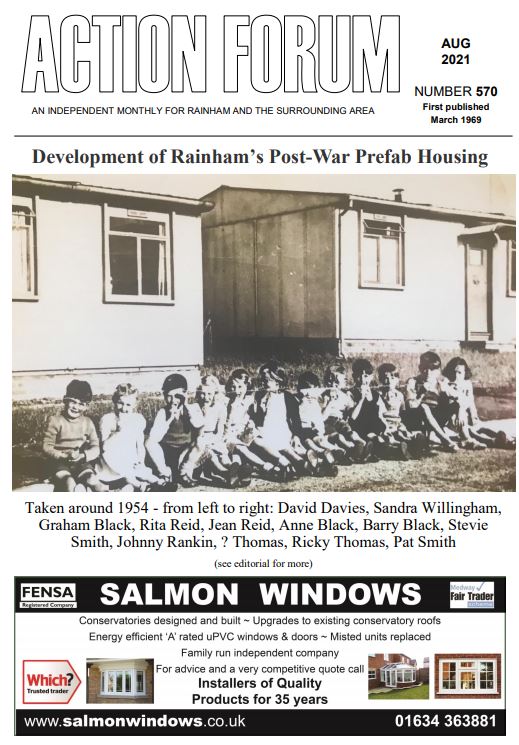
It was shared by my cousin Mrs Anne Pearce, now retired in Bexhill, and with her by her life-long friend Mrs Pat Kay. It shows the youngsters from that tight knit community and was taken by Pat ’ s late father, Mr Steve Smith. They think the photograph was taken in 1953 (the prefabricated houses having been built post war in 1947 and lasted to 1967/68 when residents were rehomed to alternative council houses in Rainham and Gillingham). They were common sights across the UK, where housing shortages were met with these asbestos and corrugated iron constructions. Loaded onto lorries the prefabs were delivered where they were needed and erected on 30ft by 22ft prebuilt brick foundations in a matter of hours. They are remembered fondly, with all ’mod cons' provided but freezing cold in winter. There were long gardens to these plots, with a shed provided, and my Uncle Bert kept chickens and grew many fruits and vegetables. There were other similar prefab communities across Rainham and Gillingham, perhaps recalled by our readers? Locations mentioned to us have been: Russells Avenue (end of Scott Avenue) and the top of Salisbury Avenue in Rainham. They were also in Scott Avenue leading from Solomon Road up to the A2 opposite Meredale School, Solomon Road and Sunderland Square, Maidstone Road (below what is now Bettescombe Road), Derwent Way, Taverners Road, Wakeley Road and some opposite the Railway Hotel by the Station. It turns out there is a prefab museum website (www.prefabmuseum.uk) which details the prefab design and origins and includes many photos and memories shared. The photo elicits for me memories of my Aunt Dolly cooking in the small kitchen, the chiming clock on her mantelpiece, the shiny brass tools around the fireplace. Strange how a single photograph can trigger so many nearly sixty year old connections. The retention of old family photographs, kept in shoe boxes or albums, some with names and dates carefully written on the back, assist our recall, whilst others lose their significance by the year as relatives pass who could put a name to a face, place or date to when they were taken. I rescued our family photo archive from Australia when my mother passed, which she had assembled over many years. Such archives are precious family treasure and dug out occasionally to refresh memories of older times.
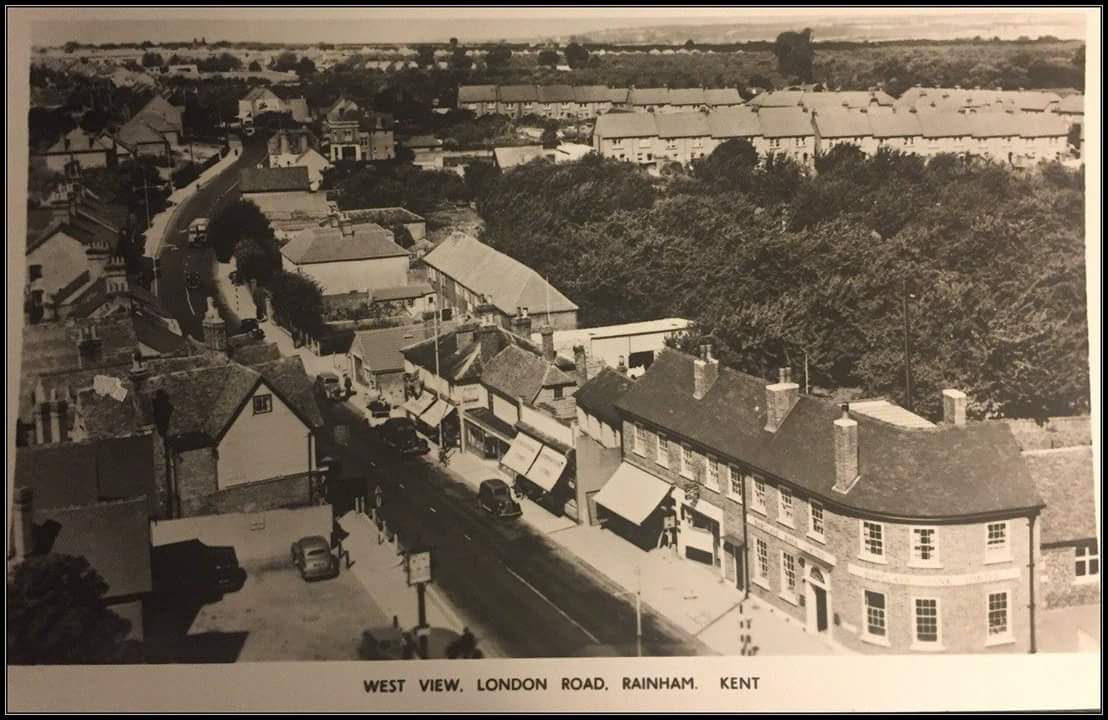
You can see the prefabs in the distance in this photo of Rainham from 1958 which would become Sunderland Square/Scott Avenue/Russells Avenue
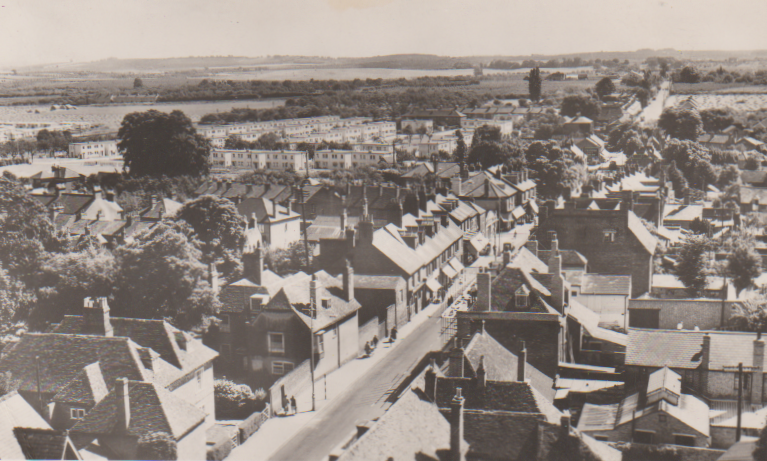
Your cover picture on the front of the August magazine certainly brought back childhood memories of living in a Rainham prefab, when we had not a care in the world, and the sun always shone! There were some errors in the locations mentioned. We lived in Russells Avenue, which was at the top of Solomon Road, where it still is today, not the end of Scott Avenue. There were eleven “houses” there, all of which were demolished and replaced with permanent housing in the early sixties I believe. The houses mentioned in Solomon Road, Scott Avenue and Sunderland Square were not actually prefabs; they were constructed from what was basically a steel frame with reinforced concrete panels. These houses were not intended to be temporary, as in the case of prefabs, but I believe there was an unforeseen problem with the degradation of the concrete, resulting in their premature demolition in 1997. The 38 houses in Sunderland Square were replaced by a development of over 100 houses. The main omission on your list is Mardale Road, which, along with its neighbour Wakeley Road, formed probably the biggest concentration of prefabs in Rainham. My family left Russells Avenue in 1958 to move to Gillingham, as the prefabs had already exceeded their intended lifespan, and, let’s just say they were “past their best!” I enclose a photograph of “our gang” taken in Russells Avenue in 1957. From left to right: Mick Curness (no.9); Keith Relph (no.8); my brother Keith Austin; Brian Austin (me) (no.6); and Robert Goodwin (no.4). My brother lives in Wigmore, and I in Rainham. I haven’t seen the other three for a very long time, but I believe Mick Curness went to Canada and Keith Relph to Northern Ireland. Although prefab winters had become decidedly uncomfortable by the late fifties, most of the prefab occupants I have spoken to over the years seem to remember their time in them with affection. I certainly do. P.S. In the background of the photograph my father, Jack, can be seen polishing his beloved motor bike and sidecar combination. He never seemed to be as fond of any of his subsequent cars as he was of his “bike.”
Subcategories
Historical life Article Count: 8
Historical life in Rainham
Rainham Life Article Count: 11
Rainham Life
Local Events Article Count: 52
Local Events
Photos Article Count: 167
Photos
Action Forum Article Count: 260
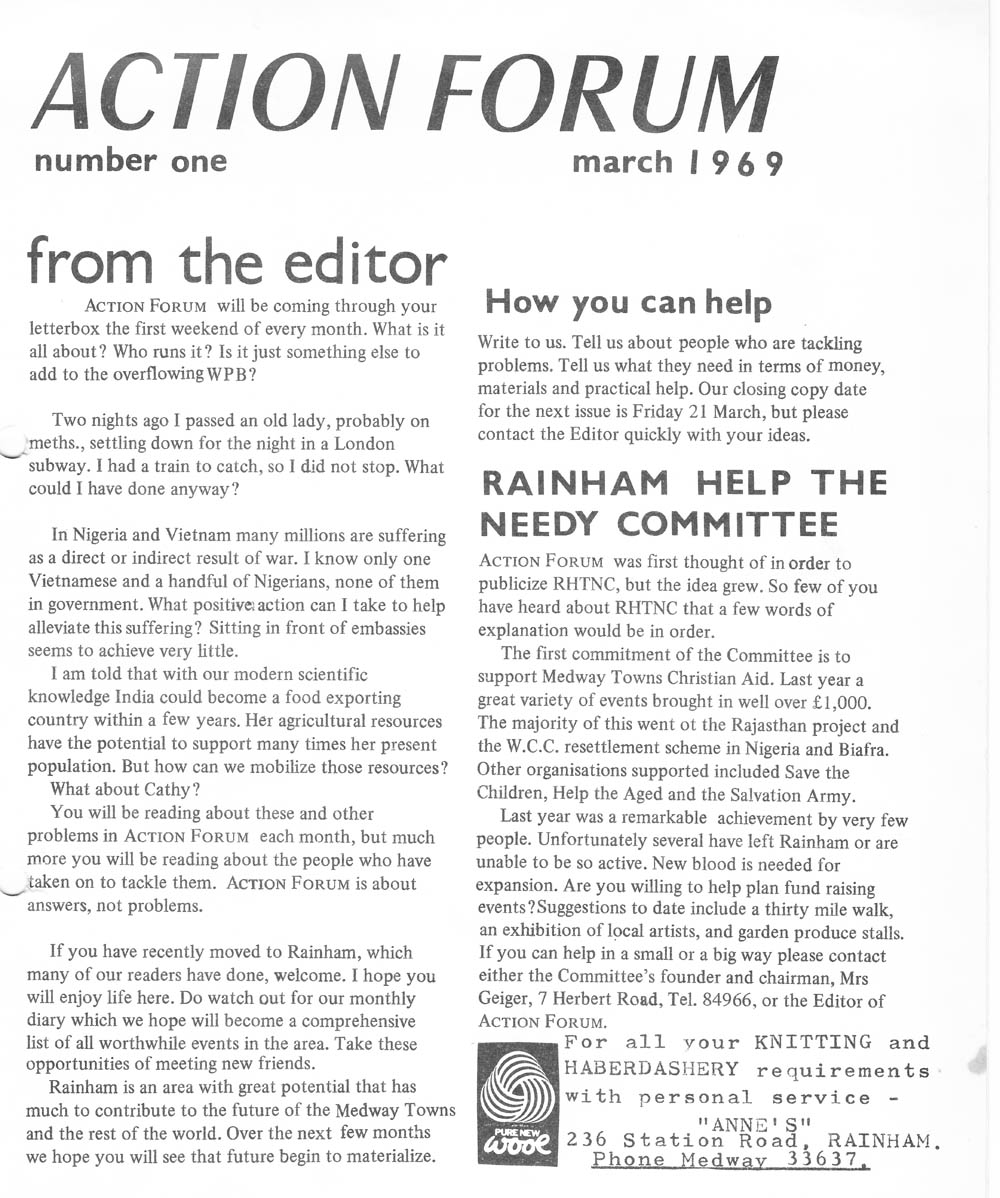
Action Forum is a free monthly magazine that is distributed to the Rainham area covering Wigmore, Parkwood and Hempstead as well. This archive covers old copies of the magazine dating back to its initial publication in 1969 and give a fascinating glimpse into life in Rainham over the last 50 years.
Link to Article Index - Action Forum Index - Photos and Articles from 1969 onwards