The Windmill on Windmill Hill near Otterham Quay
These days Windmill Hill in Upchurch is just a name without any importance for many people other than having a dangerous bend near the top of the hill, but from the early 19th century a towering windmill stood there as a familiar landmark. It could be seen for miles around due to its high location and like Upchurch church it served as a navigation point for boats sailing along the Medway. During the second half of the 19th century it became the property of ‘Wakeley Brothers’ fruit and hop business in Rainham but by the beginning of the 20th century it no longer functioned. ‘Wakeley Brothers’ allowed the structure to continue standing as a well-known landmark rather than demolish it.

Timber built with a brick base, the windmill’s wood was old and well tarred which made it highly inflammable and this eventually proved to be costly when a fire took hold.
On Thursday September 8th, 1910 the windmill caught fire. A farm worker noticed a narrow plume of smoke coming from it after he had returned from lunch. Due to the inflammability of the structure the fire took hold quickly and the high leaping flames and black smoke could soon be viewed for miles around. This caused crowds of people to converge on the scene to view the spectacle.
Eventually, after a delay of about 45 minutes, the horse drawn Rainham Fire Brigade engine arrived but there was little that could be done to save the windmill. The fire had become so advanced and the heat so intense that nobody could get anywhere near it and the situation worsened when the burning sails from the windmill broke off and fell into a nearby orchard causing considerable damage to young fruit trees that had just come into bearing. Many of these were badly burnt or scorched.
Police Constables Jenner and Sergeant Ashton from Rainham assisted by several passers-by were able to rescue some pigs in a sty close to the burning windmill otherwise the animals would have been roasted alive. A timber built store owned by Mrs. Stokes, wife of late farmer Sam Stokes also caught fire but the fire brigade was unable to save it. A standpipe positioned at the top of Windmill Hill provided water but due to the low pressure which had resulted from the high location the firemen were unable to access sufficient water quickly enough to make any great difference and were not able to control the fire for about three hours which resulted in the windmill being burnt to the ground.
Eventually the fire subsided but the windmill was completely destroyed and the nearby fruit orchard burnt and damaged. Although Mrs. Stokes store survived it was badly damaged. Several carts, a collection of fruit baskets, wheat and grain inside the store were destroyed or damaged. The cost to ‘Wakeley Brothers’ was about £250 and Mrs. Stokes lost about £100. Both parties were later able to claim insurance but the windmill, such a significant landmark on the landscape for about a century, disappeared for ever and only the name and a few photos survive.
- Details
- Category: History Articles
Updated December 2024 with new details from Graham Cook
Moving from Orchard Street to the 36 acre site in Derwent Way Rainham in September 1967, the boys found the new school much more spacious with newer facilities than their previous one. The school was originally known as Rainham Secondary School for Boys as it had been in Orchard Street. It became known as the Howard School in 1975 when Gillingham Grammar for Boys moved to the site and the combined schools became known as a bi-lateral school, the secondary modern becoming the A stream and the Grammar becoming the Alpha stream. Many boys puzzled over the name and thought it came from the building company that had constructed the site. In reality the building was named after Dorothy Howard who had served as Education officer for Medway and had been involved in local community and political affairs.
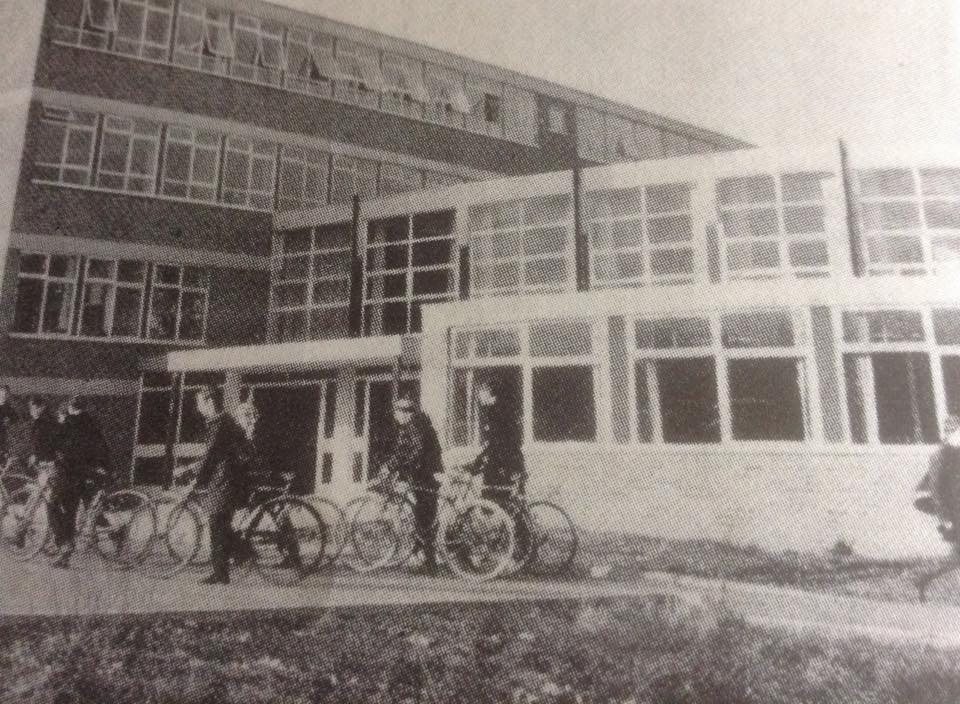
With a school population of about 500 and a four house system consisting of Tufton, Queens, Dering and Chaney, Mr Bacon continued as headmaster with his ageing white haired secretary in the adjacent office. Most of the Orchard Street staff continued although a few retired while well-known caretaker Mr Milgate remained at Orchard Street when the transfer took place.
Mr Newell continued as the art teacher and later became acting-head after the retirement of Mr Bacon, while Mr Gibbs continued as the principal English teacher, the librarian and wrote the annual school play. He left the school soon after its opening to teach at the former Sittingbourne teacher training college.
Mr Patterson remained as the geography teacher and Mr Barnes the maths teacher. Mr Powell continued teaching science and later became deputy-headmaster and Mr Rotherham continued teaching craft and organised the school football and cricket teams before retiring aged 81 during the late 1990s. Mr Groves, a muscular rugby player and athlete taught PE and games.
Well-known new teacher arrivals were Mr Ansell and Mr Bullen who also played for Rainham Cricket Club, Mr Clark who taught PE and originated from the Midlands, Vaughn Jenkins, a fat Welshman with a booming voice who ended up teaching English as a Foreign Language in Qatar and Ukraine before retiring to Blackburn. Mr Johns, another Welshman turned out to be a very introverted individual, prone to bursts of temper. Well-spoken Mr Richards taught English and tried to be best friends with all the boys. He wore thick black rimmed glasses and originated from Sussex.
Alan Suttie from Maidstone Road, who later became a graphic artist in London, served as head-boy with a group of prefects who all sat on the school stage during the morning assembly while Mr Bacon or deputy-head Mr Thomas conducted prayers and gave a daily sermon.
The prefect’s room had a table tennis table and many of the prefects played there and sometimes had to be removed by Mr Rotherham when they should have been in lessons or doing private study.

Photo of Howard/Rainham Girls School in 2004
Because the playing fields were new a large number of stones appeared from below the surface, so initially many school football matches had to be played at the Langton Playing Fields, while during the summer some home cricket matches were played at Berengrove Park, the home of Rainham Cricket Club. A red gravel area existed for football practice but many boys complained of serious leg grazes after falling over and the orange dust stuck to their clothes. Outdoor artificial nets existed for cricket practice but the playground was preferred by pupils for sport. With a big gym, spacious science labs, well-lit classrooms and a dining hall, the new school had better and newer facilities than at Orchard Street but not as much atmosphere as the old school was smaller and more centrally located.
Well-known Howard Schoolboys from the period include George Meegan who became the first person to walk from the bottom of South America to the top of North America without any financial backing or special equipment for which he is in the Guinness Book of Records. Footballer Derek Hales went on to play for Luton, Charlton, West Ham, Derby and Gillingham. He later returned to the Howard School as a part-time football coach. Stuart Hart became landlord of the Angel pub in Station Road and a familiar scrap metal collector around Rainham while Raymond Hales, Alfie Fisher, Andy Findlay, Geoff Stone, Mick Arnold, Peter Heath and Malcolm Young became well-known local footballers.
With the closure of Gillingham Grammar School, the boys there moved to the Howard School in 1975 where they formed the grammar section of a new bi-lateral school, one of only five in the United Kingdom led by headmaster Mr Hicks. This amalgamation of the old Rainham Secondary School with Gillingham Grammar expanded the Howard School population to around 1,500 boys. The school remains one of the largest in Medway today.
The update below was provided by Graham Cook:
During my time at the Secondary Modern from 71 to 75 and the Howard 75 to 76 there were no prefects or headboy. The house names were different and were based on Kent Island, Grain, Romney, Sheppey, Thanet, Oxney and one other.
Eric Rotherham was a stunted midget and sadist. He once rather foolishly tried to break up an arranged playground fight between two older boys and took a knockout punch as he stepped in between them. That was the highlight of my time there. Vaughn Williams was a fat useless Welsh got who enjoyed insulting the boys. The school was bad in 1971, but went progressively down hill as the useless teachers knew there time was coming to an end with the planned arrival of the grammar school. Many teachers didn't bother to turn up for lessons and many went to the pub lunch time and didn't bothering coming back in the afternoon. They should have been sacked for taking money under false pretences.

- Details
- Category: History Articles
If you visit the Hempstead Valley Shopping centre from Hempstead Road you might have spotted signs for Chapel Lane that joins it to Hempstead Valley Drive but this tiny section is all that remains of the original Chapel Lane that ran from Hempstead to Bredhurst. The name is derived from the old Lidsing Chapel that once stood next to the current allotments opposite the Marks & Spencer store on Hempstead Valley Drive. Lidsing Chapel - St Mary Magdalene Chapel by ALAN WARD
When Hempstead Valley was originally opened in 1978 Chapel Lane was incorporated into Hempstead Valley Drive and then ran off to the right hand side of the road prior to the roundabout.
The photo below was taken on Chapel Lane looking towards Hempstead Valley. M&S would now be to the left of the buildings shown and Hempstead Valley Road runs across the picture below the fence.

The photo below shows the roundabout for Sharsted Way junction with Hempstead Valley Drive. Chapel Lane is to the left of the picture. The photo above was taken to the left of the wooden fence that goes across the frame.

Interestingly Google Maps still shows Chapel Lane in its original location despite the road not being there for nearly 40 years. It does however usefully show what the route of the road was before it closed. As you can see from the map below Chapel Lane heads directly away from Savacentre towards Lidsing and joins up with Forge Lane to go across the M2 motorway bridge to Bredhurst and The Street.

This isn't the first route that Chapel Lane took. Until the M2 motorway was opened in 1963 Chapel Lane ran directly from Hempstead to Bredhurst and ended up at the Bell public house. You can see the route veering off at right angles to the currently marked Chapel Lane and both sides of the road meeting with the M2 in between.

The close up view is clearer below

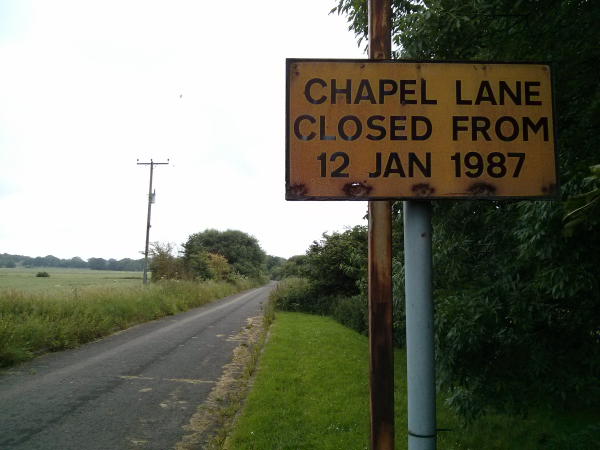
For years there was a sign on Chapel Lane as a dead end road as a drive out of Hempstead so I finally stopped and got a few photos back in 2012. This was a road that I remember driving down when I was learning to drive and shortly afterwards was closed. I've not found any information why Chapel Lane in Hempstead was closed to traffic in 1987 but most of the road remains in place with just a gate blocking the entry. The yellow sign is no longer present but the road is still blocked off and no longer exists as you reach the woods before Hempstead Valley.
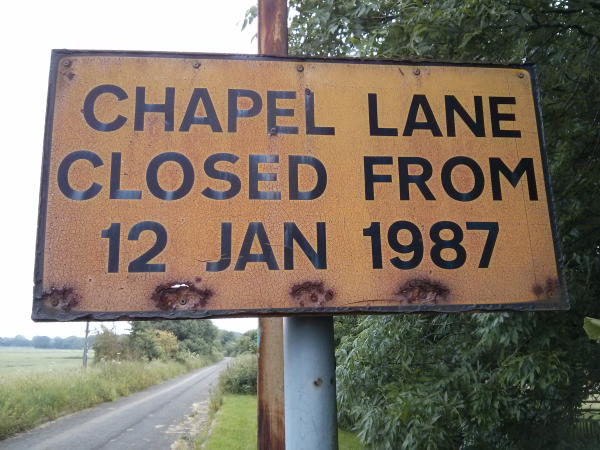
Chapel Lane Hempstead runs from Forge Lane (which leads to Bredhurst) near the junction with Lidsing Road through Chapel Hill Woods and joins Hempstead Valley drive near Savacentre/Hempstead Valley shopping centre M&S entrance. The road is still shown on Google maps with no indication of its closure. The road is narrow and maybe was unsuitable for large numbers of vehicles but would ease traffic on the Capstone Road/Hempstead Road junctions.
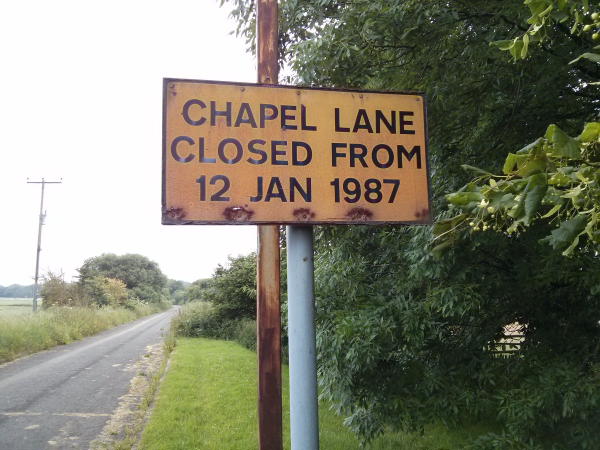
Some more information about Chapel Lane and the Chapel of St Mary Magdalene, Lydsing is here Lidsing Chapel - St Mary Magdalene Chapel by ALAN WARD
- Details
- Category: History Articles
The First Rainham Soldier Killed in World War 1
When war was declared in July 1914 most people believed that it would be a short and glorious affair. In Rainham young men joined up while others who were already in the forces soon became involved.
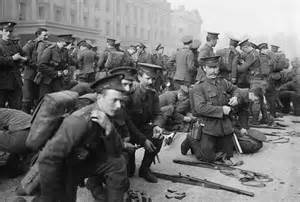
Originally born in Chatham, Thomas Henry Anderson lived in Chatham, Rainham and Upchurch during the period leading up to 1914, working as a butcher’s assistant before joining the 1st Battalion of the Northumberland Fusiliers. His first military experience took place in India which at that time remained part of the British Empire and while serving there he was awarded the Delhi Durbar Medal in 1911 to commemorate King George’s coronation celebrations in India
.
After completing his posting in India he returned to England where he was stationed at Portsmouth but with the outbreak of war in July 1914 it wasn’t long before he found himself sailing to France as part of the British Expeditionary Force made up entirely of professional soldiers under the command of General Sir John French. As a member of the 1st Battalion of the Northumberland Fusiliers he disembarked at Le Havre in France before being transported inland by train to Landrecies.

According to the regimental history of the Northumberland Fusiliers, on 21st August Thomas Anderson’s regiment marched towards Mons where the Ist Battalion took a position on the Mons Condé Canal while the French were fighting the Germans at the battle of Charleroi on the right of the British Expeditionary Force. The British aim was to hold a line along the Mons-Condé Canal for 24 hours to prevent the advancing Germans from threatening the French left flank. When the battle began the British inflicted heavy casualties on the German side but with the retreat of the French Fifth Army which exposed the British right flank to numerically superior German forces a retreat was ordered.
After their first conflict the battalion crossed the River Marne on September 9th and soon confronted German infantry in a wooded area at Veuilly. During the course of this they crossed a stream and marched on to the village of Dammard. They then crossed the River Aisne and billeted at Vailly. On September 14th they moved forward in support of the 4th battalion of the Royal Fusiliers near Rouge Maison and waited. At dawn the Germans attacked and the fusiliers were driven back after engaging their enemy in a wood on the left side. They lost more than 30 soldiers which probably included Thomas Anderson and 84 officers and men wounded or missing.
It isn’t clear exactly how he was killed but Thomas, who held the rank of Lance-Corporal, was later awarded the ‘Mons Star,’ a medal awarded to those who had fought the Germans in France and Belgium between 5th August and 23rd November 1914. He is remembered on the Upchurch and Rainham war memorials and on La Ferte-Sous-Jouarre memorial east of Paris. The Northumberland Fusiliers in which Thomas Anderson served raised 51 battalions for service in the Great War and lost a total of 16,000 men.
Thomas Anderson became the first Rainham serviceman to be killed in the conflict and 98 others from the village suffered the same fate in the Great War of 1914-1918. 527 words.
- Details
- Category: History Articles
The Quest for a Catholic Church in Rainham
Four centuries after Henry VIII’s break with Rome and nearly 40 years of hard work and organisation during the first half of the 20th century, the dream of a Catholic church eventually became reality for the Rainham Catholic community in 1958.
During the 1920s services were held at the Rainham Brotherhood Hall situated in Church Lane close to St Margaret’s church in Rainham High Street. An estimated congregation of about 50 people regularly attended Sunday morning Mass. The rent cost about 15p a week and Father Gerald Quinn, assistant priest at Gillingham Catholic Church organised everything, but the Rainham Catholic community were keen to move away and have a hall of their own.
The first stage of getting a permanent and suitable base began when the Diocesan Trustees bought a plot of land on a site adjacent to the London Road, the old medieval pilgrimage route from London to Canterbury for £270 with help from the parish of Gillingham in 1921.
When presiding Rainham priest Father McMahon retired communication between Father Gerald Quinn from Gillingham and the church authorities led to permission eventually being given for the building of a parochial hall on the new site. On August 2nd 1933 the hall with a capacity for 160 people became reality. The building served as a temporary church. Bishop Amigo opened it on November 10th 1934.
The Catholic community immediately set to work organising fund raising events through a newly elected social committee. Although weekly collections were only £1, whist drives were held and raffles took place while coach trips were arranged to the coast and other local locations during the summer months to raise funds for the new church.
By 1951 congregations had risen to 237 and a new fund raising scheme was introduced for finances to build a new church. To raise money a Catholic football pool and a Mile of Pennies scheme were set up. Such were the efforts that £158 8s 0d had been raised by October 1953.
On November 14th 1954 the parishes of Rainham and Gillingham held a social event to help boost funds to build a new church and school in Rainham. On the same evening a final decision was made to go ahead with the building of a church. A social club and a youth club were formed about the same time.
Dances held in the parochial hall proved to be a great success attracting people from far and wide. Bricks were sold for the new church at about 15p each after Sunday Masses. Rainham members of the Medway Catholic Women’s Guild made vestments for the new church and took it so seriously that they attended a course at the Medway College of Art in Rochester to ensure that they provided a high quality product.
Eduardo Dodds became the architect entrusted with designing the new church then on April 21st 1956 tenders for the building were revealed. Of seven local companies J H Durrant of Strood had their tender accepted and construction got underway in the Autumn of 1956 when the foundations of the church were dug and the brickwork begun. Although a crisis regarding finances arose at one stage a solution was eventually found and the building, dedicated to St Thomas of Canterbury, continued and became the only Catholic church to be constructed in the diocese at that time. With all the trials and tribulations involved in the construction with regard to finances, the ‘Laying of the Foundation Stone’ took place with Bishop Cyril Cowderoy directing the proceedings on December 29th 1956.
The new church had an interesting design in the modern idiom with beautiful carvings and statuary completed by Michael Clark FRBS who became President of the Royal Academy of Art. The church also acquired his ‘14 Stations of the Cross’ and the canonical erection of this took place on November 19th 1958. A statue of St Thomas of Canterbury, a gift presented to the church by Father Scott, was placed in front of the organ where it could be seen by members of the congregation leaving the church.
The church ceramics were designed by Adam Kossowski. These included a figure of St Joseph seated with the child Jesus. In the Lady Chapel angels were set against a background of blue tiles. A colourful depiction of the murder of St Thomas of Canterbury above the main entrance of the church is unique although Reverend Trew of Upchurch wrote in his short history of Upchurch church in 1911 that a fresco of St Thomas of Canterbury existed on the wall of the Lady Chapel of Upchurch church until it was whitewashed over after repairs.
The official opening of St Thomas of Canterbury Church took place on April 28th 1958 although the consecration of the building did not happen until June 11th 1970. A decision had been made to pay off all the debts for the building before the event could took place.

Photo of St Thomas of Canterbury Catholic Church, Rainham, Kent
Father Swinton continued as the parish priest and he remained until 1961. He lived nearby in Salisbury Road. Father Petry succeeded him and stayed until 1963 then Father Gleeson arrived and served the parish for ten years.
Now a familiar and distinct landmark on the main road to Gillingham, St Thomas of Canterbury church continues to attract new members to its congregation and remains an important location in the parish. It also maintains a close connection with St Thomas of Canterbury Primary School in Romany Road and St John Fisher Catholic School in Chatham.
- Details
- Category: History Articles
Subcategories
Historical life Article Count: 8
Historical life in Rainham
Rainham Life Article Count: 11
Rainham Life
Local Events Article Count: 52
Local Events
Photos Article Count: 167
Photos
Action Forum Article Count: 263
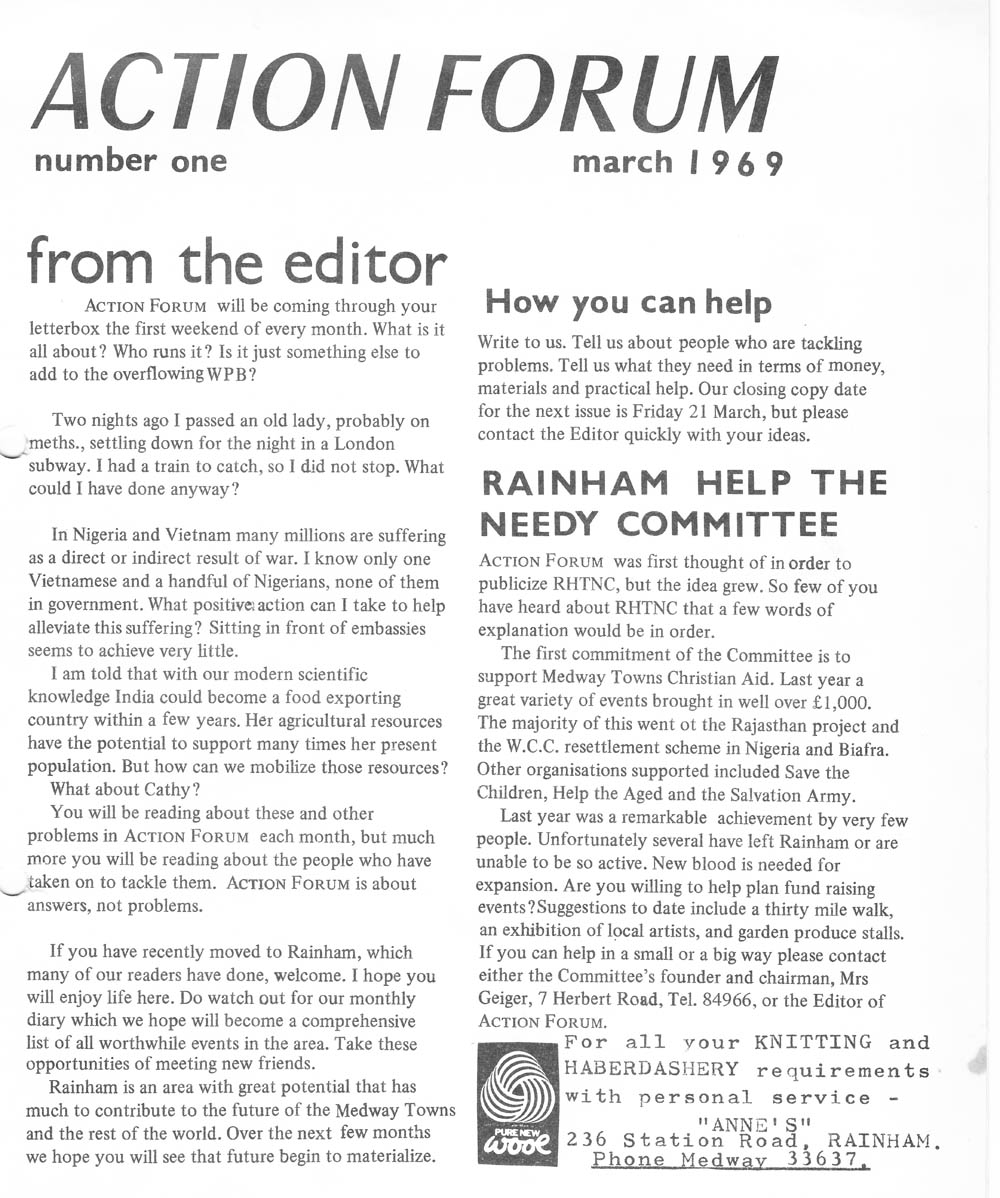
Action Forum is a free monthly magazine that is distributed to the Rainham area covering Wigmore, Parkwood and Hempstead as well. This archive covers old copies of the magazine dating back to its initial publication in 1969 and give a fascinating glimpse into life in Rainham over the last 50 years.
Link to Article Index - Action Forum Index - Photos and Articles from 1969 onwards